7 High Protein Meal Prep Lunches, With the Grams Worked Out
Most high protein meal prep advice comes down to “add protein powder,” and the rest quotes gram counts nobody has checked. We wanted lunches that reach a real number with food from an ordinary grocery store, and we wanted to know where the number comes from.
So every lunch below shows its arithmetic. The values come from standard nutrition data for the raw ingredient, rounded, and the totals are ours. Your brands will differ by a gram or two, and your label beats our table.
High Protein Meal Prep, Counted Honestly
The rule that makes this work is boring: the protein goes in first, and it’s measured raw. Six ounces of raw chicken thigh is about 33 grams of protein. Cooked, the same piece weighs closer to four and a half ounces, so a raw weight and a cooked weight can’t be mixed with the same nutrition value without the count going wrong by a quarter or more.
Everything else in the container adds a little. Rice adds about four grams, a cup of broccoli two or three, a spoon of Greek yogurt in the sauce three or four. None of it is dramatic; together it’s the difference between 33 and 43.
Here are the seven lunches at a glance, per container:
| Lunch | Main protein | About |
|---|---|---|
| Chicken thigh, rice, broccoli | 6 oz raw chicken thigh | 43 g |
| Turkey and black bean chili | 4 oz raw ground turkey | 35 g |
| Egg and lentil bowl | 2 eggs, 3/4 cup lentils | 31 g |
| Tuna and white bean salad | 1 drained can of tuna | 32 g |
| Peanut tofu noodles | 7 oz extra-firm tofu | 40 g |
| Flank steak and broccoli | 4 oz raw flank steak | 32 g |
| The snack box | Cottage cheese, 2 eggs | 33 g |
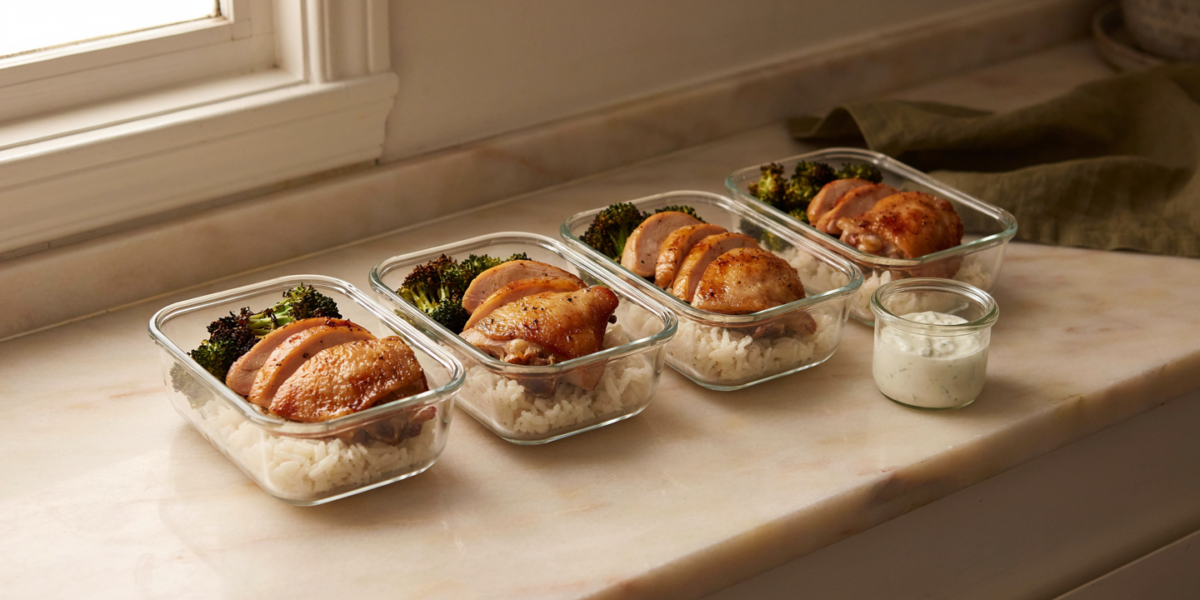
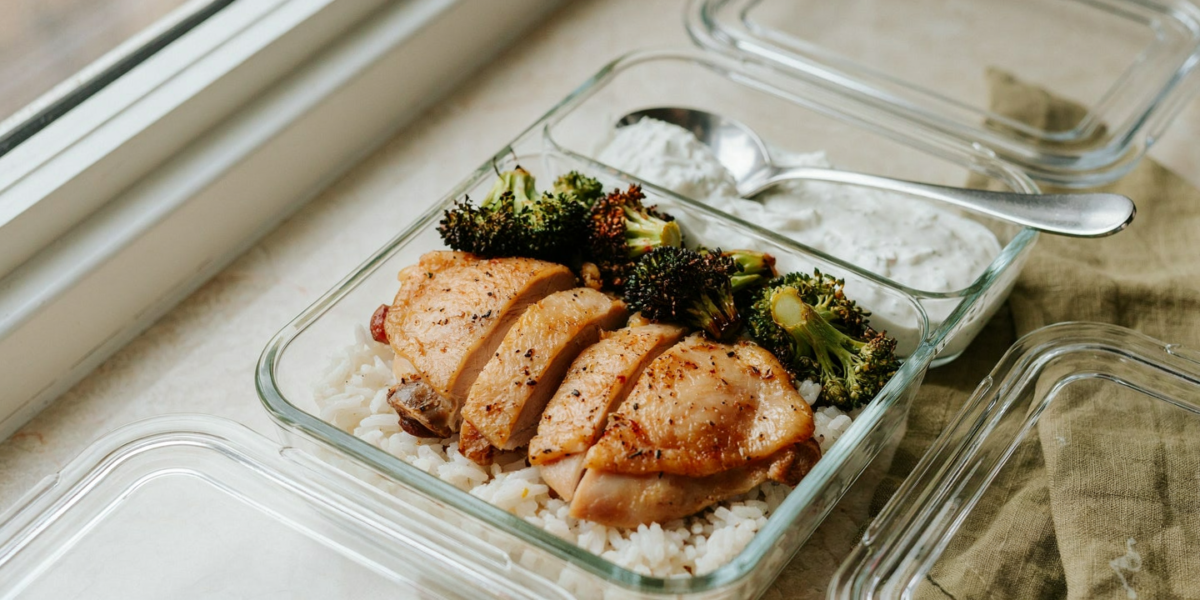
1. Chicken thigh, rice and roasted broccoli (about 43 g)
Per container: 6 ounces raw boneless skinless chicken thigh (about 33 g), 3/4 cup cooked white rice (4 g), a cup of roasted broccoli (2.5 g), and two tablespoons of garlic yogurt sauce made with Greek yogurt (3.5 g).
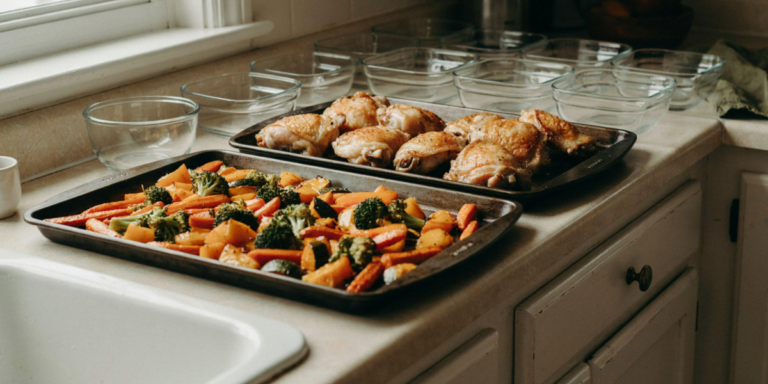
Roast the thighs at 425°F for 25 to 30 minutes, to an internal temperature of at least 165°F. Thighs stay juicy on day four in a way breast meat doesn’t, which is the main reason they’re here instead of breast.
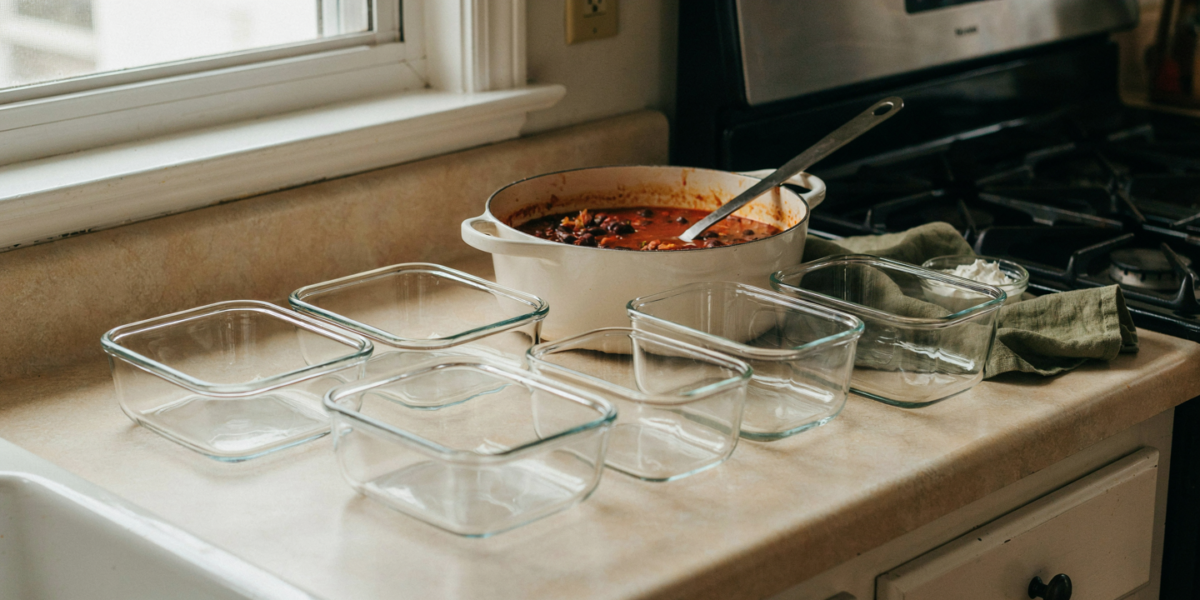
2. Turkey and black bean chili (about 35 g)
For four containers: 1 pound 93% lean ground turkey, two 15-ounce cans of black beans (drained and rinsed), one 28-ounce can of crushed tomatoes, an onion, garlic, chili powder and cumin. Per serving that’s about 21 g from the turkey, 10 g from three-quarters of a cup of beans, and 3 to 4 g from the tomatoes and onion. A spoon of Greek yogurt on top adds another three.
Ground turkey is poultry, so it’s cooked to 165°F, not the 160°F used for ground beef. Chili also freezes better than anything else on this list.
3. Egg and lentil bowl (about 31 g)
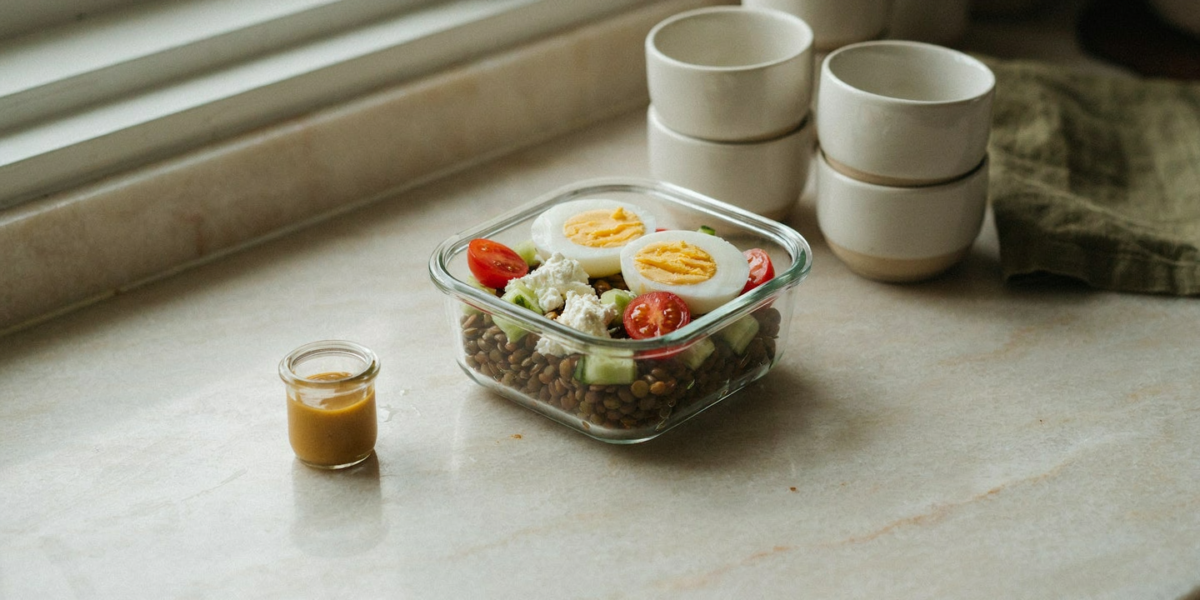
Per container: two hard-boiled eggs (12.6 g), 3/4 cup cooked green or brown lentils (13 g), an ounce of crumbled feta (4 g), plus cucumber, cherry tomatoes and a lemon-mustard dressing kept in a separate little jar.
This is the one for people who want a lunch that doesn’t need reheating. Hard-boiled eggs keep up to a week in the refrigerator in their shells; peeled, eat them within the four days like everything else.
4. Tuna and white bean salad (about 32 g)
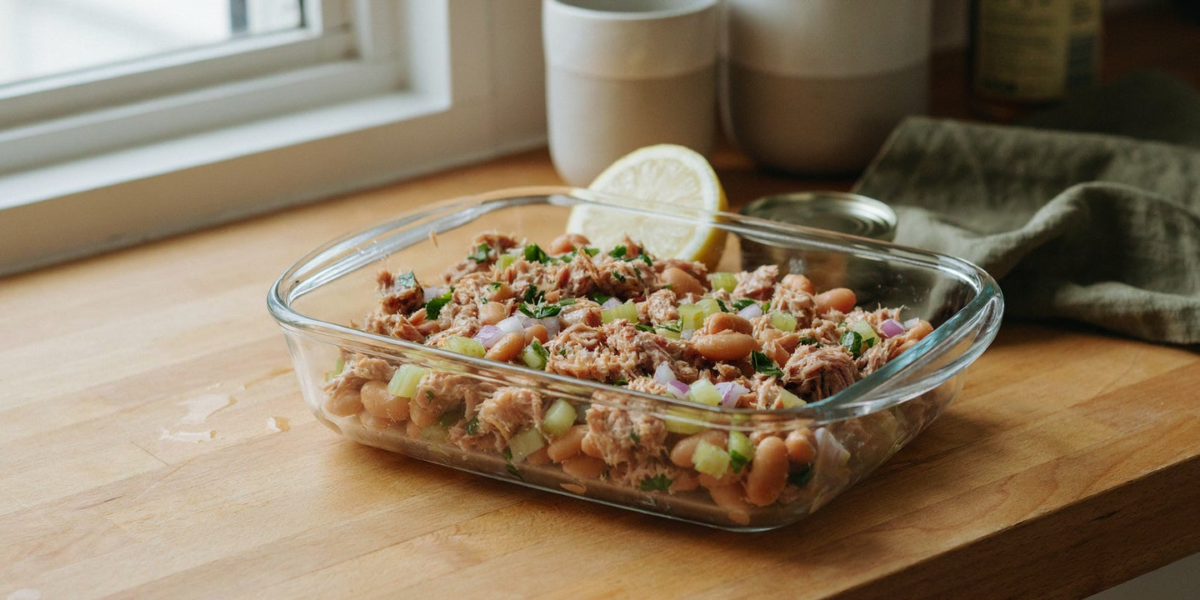
Per container: one 5-ounce can of light tuna packed in water, drained (roughly 25 g, check your label), and 1/2 cup cannellini beans (7 g), with chopped celery, red onion, parsley, olive oil and lemon.
It keeps three to four days and eats well cold. It’s also the cheapest lunch here by a distance, and it takes ten minutes.
5. Peanut tofu noodles (about 40 g)
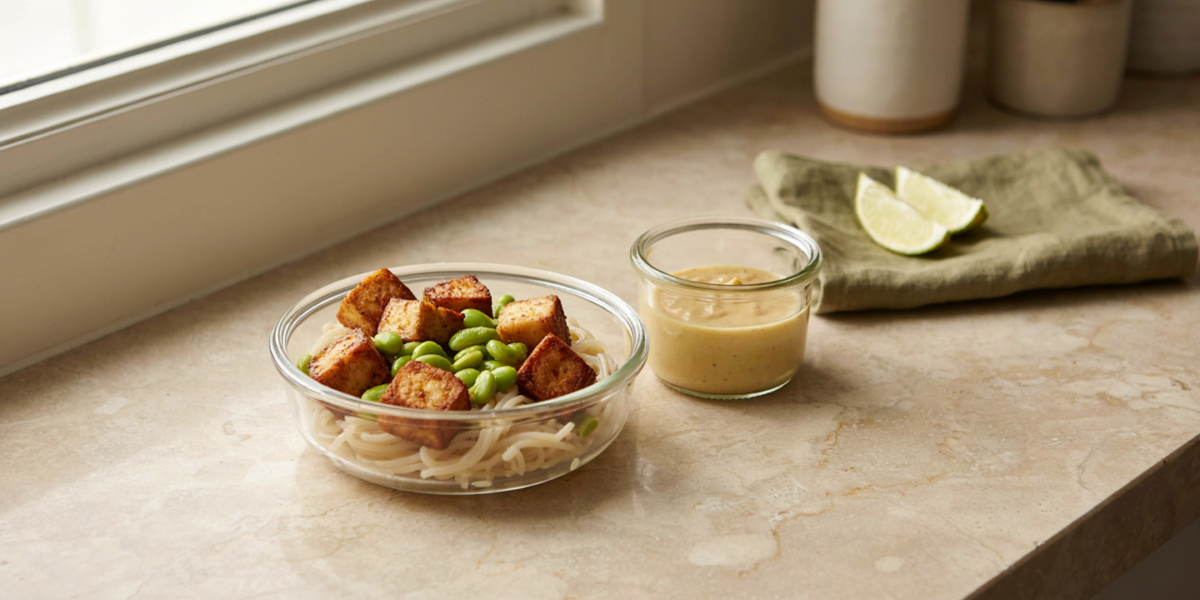
For four containers: two 14-ounce blocks of extra-firm tofu, pressed, cubed and baked; 8 ounces of dry soba noodles; 2 cups shelled edamame; and a peanut-lime sauce made with four tablespoons of peanut butter.
Per container: half a block of tofu is roughly 20 to 23 g depending on the brand (this is the number that varies most, so read yours), plus about 9 g from the edamame, 8 g from the soba and 4 g from the peanut butter. Keep the sauce separate until the morning, or the noodles drink it.
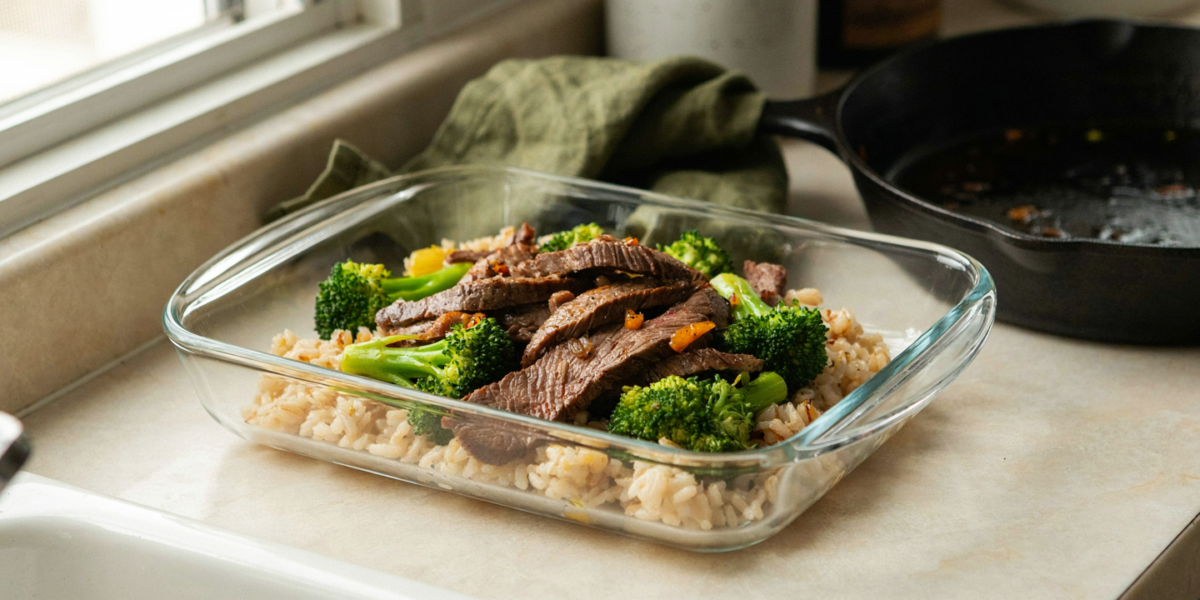
6. Flank steak and broccoli (about 32 g)
Per container: 4 ounces raw flank steak, sliced thin across the grain (24 g), a cup and a half of broccoli (4 g) and 3/4 cup brown rice (4 g), in a quick soy, garlic and ginger sauce thickened with cornstarch.
Whole cuts of beef are safe at 145°F with a three-minute rest; thin slices in a hot pan get there in two or three minutes. Undercook the broccoli slightly, because it keeps softening in the container.
7. The snack box (about 33 g)
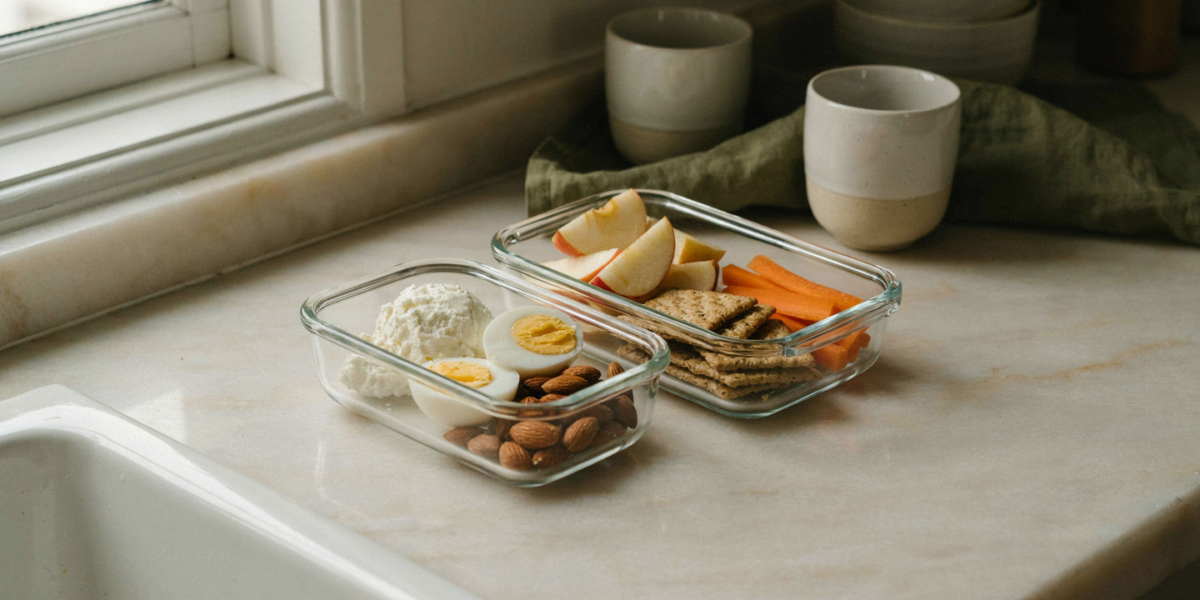
Per container: 1/2 cup 2% cottage cheese (12 g), two hard-boiled eggs (12.6 g), an ounce of almonds (6 g), whole grain crackers (2 g), plus an apple and some raw vegetables.
It isn’t a recipe, and that’s the point. On a week when there’s no time to cook, this is thirty-three grams of protein you can pack in five minutes a day.
What We Would Skip
Chicken breast for day four. It’s leaner, but it dries out in the container, and a dry lunch is the one that gets replaced by takeout.
Fish beyond day two. Salmon and white fish are excellent sources of protein and poor meal prep; cook them fresh.
Chasing a number without eating the lunch. A container that reaches 50 grams but that you dread on Wednesday does less than one at 32 grams you actually finish. We aren’t nutritionists, and how much protein you need depends on you; the point here is knowing what’s in the container.
Where We Would Start
Pick two lunches, not seven. The chicken thighs (1) and the chili (2) share an oven and a stovetop, and together they take about 90 minutes using the sequence from our meal prep for the week. Freeze two portions of chili for the week the session doesn’t happen.
If mornings are the problem rather than lunches, our breakfast meal prep and overnight oats add another 15 to 20 grams before noon.
Questions We Get Asked
How much protein is in a typical high protein meal prep lunch?
The seven here land between about 30 and 43 grams per container. Most of that comes from four to six ounces of raw meat, two eggs, or a combination of beans, lentils and dairy.
How long does high protein meal prep last in the fridge?
Three to four days for cooked meat, beans and grains. Hard-boiled eggs keep up to a week in their shells. Anything you want for Friday should go into the freezer on Sunday.
Can you make high protein meal prep without meat?
Yes. The egg and lentil bowl, the peanut tofu noodles and the snack box all reach 30 grams or more without meat. Lentils, beans, eggs, tofu, edamame, Greek yogurt and cottage cheese do the work.
Should you weigh meat raw or cooked for meal prep?
Raw, because that’s what nutrition labels on raw meat describe. Meat loses a quarter to a third of its weight in cooking, so weighing cooked meat and reading it against a raw value undercounts the protein, and the reverse overcounts it. Pick one and stay with it.
What is the cheapest high protein meal prep?
Eggs, canned tuna, dried or canned beans, lentils and chicken thighs, roughly in that order. The tuna and white bean salad and the egg and lentil bowl are the two cheapest lunches on this list.
Do I need protein powder?
No. Every lunch here reaches 30 grams or more with ordinary groceries. Powder is convenient, not necessary.