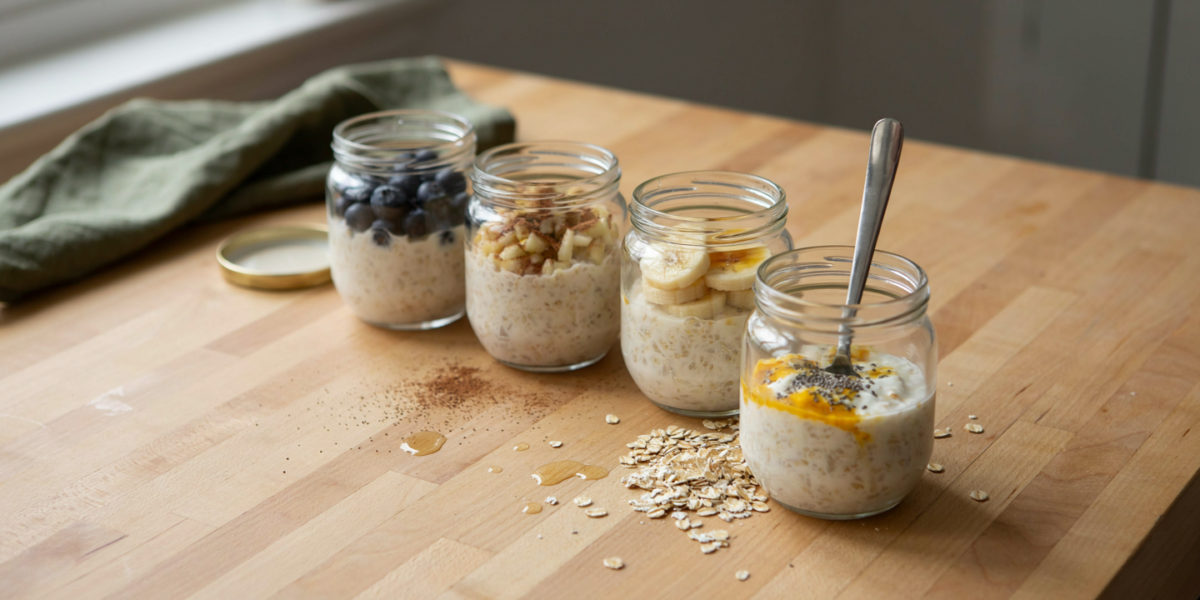
7 Overnight Oats Recipes That Still Taste Good on Day Four
Overnight oats have a reputation for being either perfect or gluey, and the difference is almost never the recipe. It is the ratio, the kind of oat, and what went into the jar too early. Get those three right and the flavor on top is the easy part.
Below is the base we use for every jar, then seven flavors built on it. Each one keeps four days in the refrigerator, and each one tells you what to hold back until the morning you eat it.
Overnight Oats: The Base Ratio Before Any Recipe
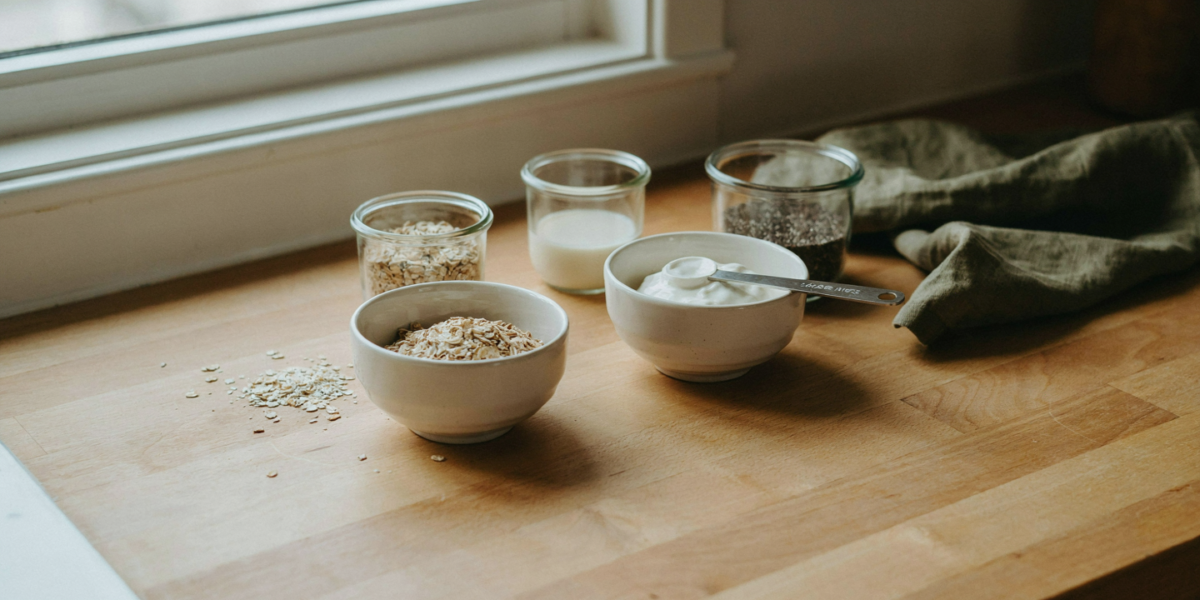
One jar, one serving:
- 1/2 cup old-fashioned rolled oats. Not quick oats, not steel-cut.
- 1/2 cup milk. Dairy, oat, soy or almond all work. Water works too, but it tastes like it.
- 1/4 cup plain Greek yogurt. This is what makes it creamy instead of soggy.
- 1 tablespoon chia seeds. Optional, but they soak up the extra liquid and keep day four from turning runny.
- A pinch of salt and 1 to 2 teaspoons of maple syrup or honey.
Stir, lid, refrigerate. It needs at least six hours; overnight is better. By our own arithmetic from standard nutrition values, that base lands at about 17 grams of protein per jar before any toppings, most of it from the yogurt and milk.
Why rolled oats: quick oats are cut thinner and turn to paste by the second day. Steel-cut oats stay hard and chewy after a night in milk, which some people like and most people don’t. Rolled oats are the middle, and they hold their shape for four days.
Two small adjustments cover almost every complaint. If the jar is too thick on day one, the chia and yogurt are doing more than you want: add two tablespoons of milk in the morning and stir. If it’s thin and loose, either the milk was measured generously or the yogurt was a runny one; next time cut the milk to 1/3 cup. Mix everything in a bowl first and then spoon it into the jar. Stirring inside a narrow jar leaves a dry layer of oats stuck to the bottom that never softens.
1. Vanilla and cinnamon, the one we make most
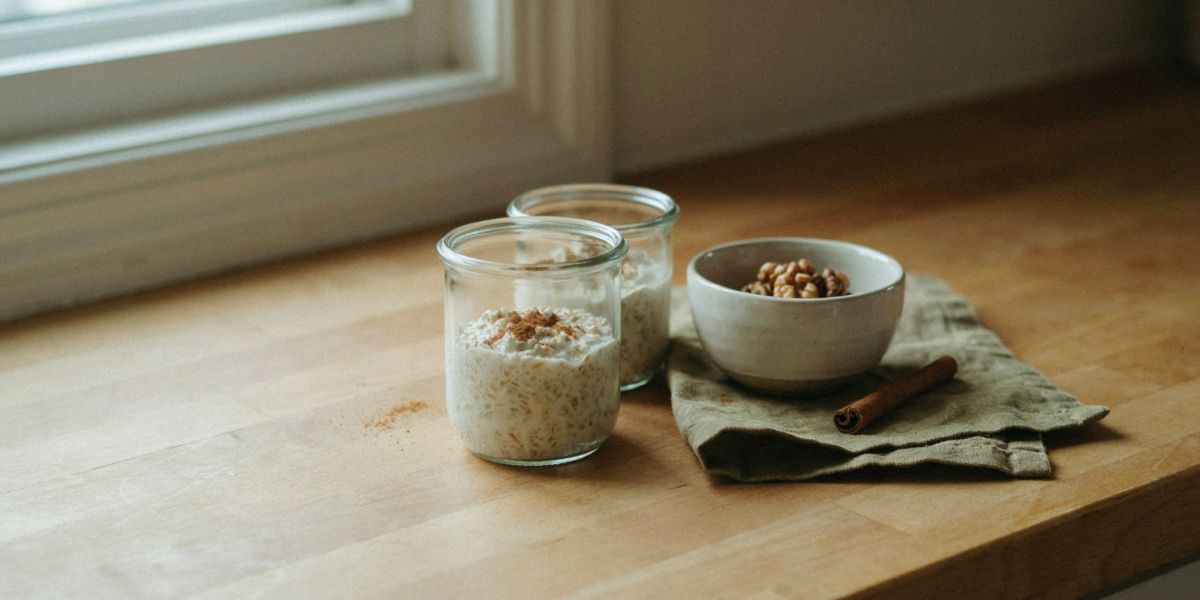
Add 1/2 teaspoon vanilla extract and 1/4 teaspoon cinnamon to the base. That’s it. This is the jar we make four of when we don’t want to think, and it’s the one that takes toppings best: a spoon of peanut butter one morning, a handful of berries the next.
Add in the morning: anything crunchy. Nuts and granola go soft within an hour of meeting the milk.
2. Peanut butter and banana
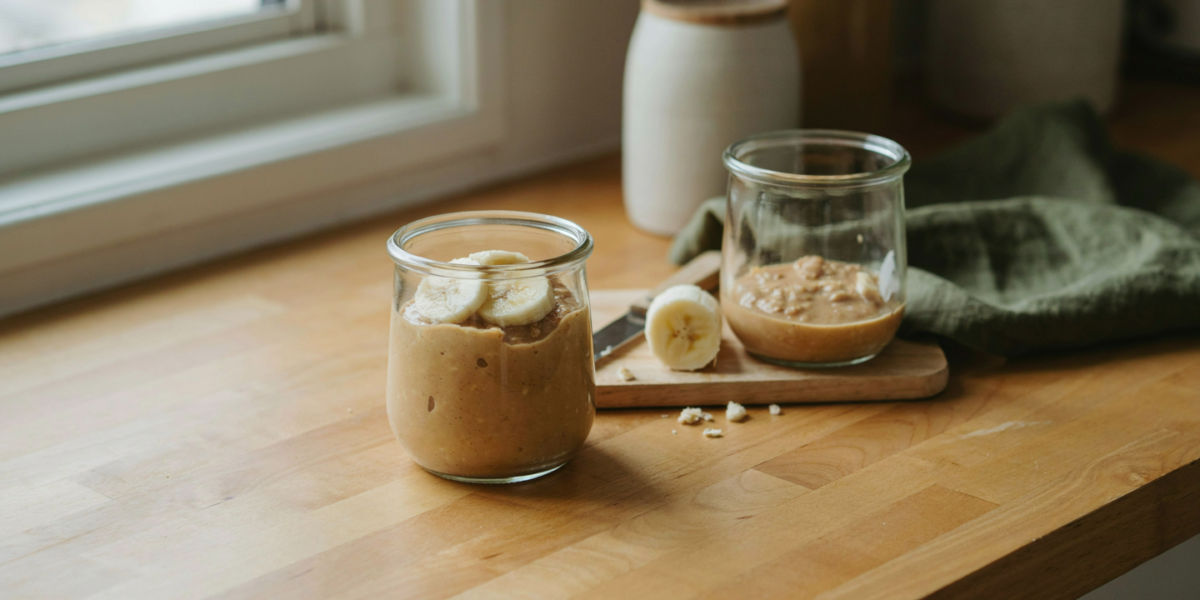
Stir 1 tablespoon of peanut butter into the base before it goes in the jar. It mixes more easily if you loosen it with the milk first.
Add in the morning: the banana. Sliced banana browns in the jar by day two, and mashed banana makes the whole thing taste slightly fermented by day three. Slice half a banana on top when you eat it.
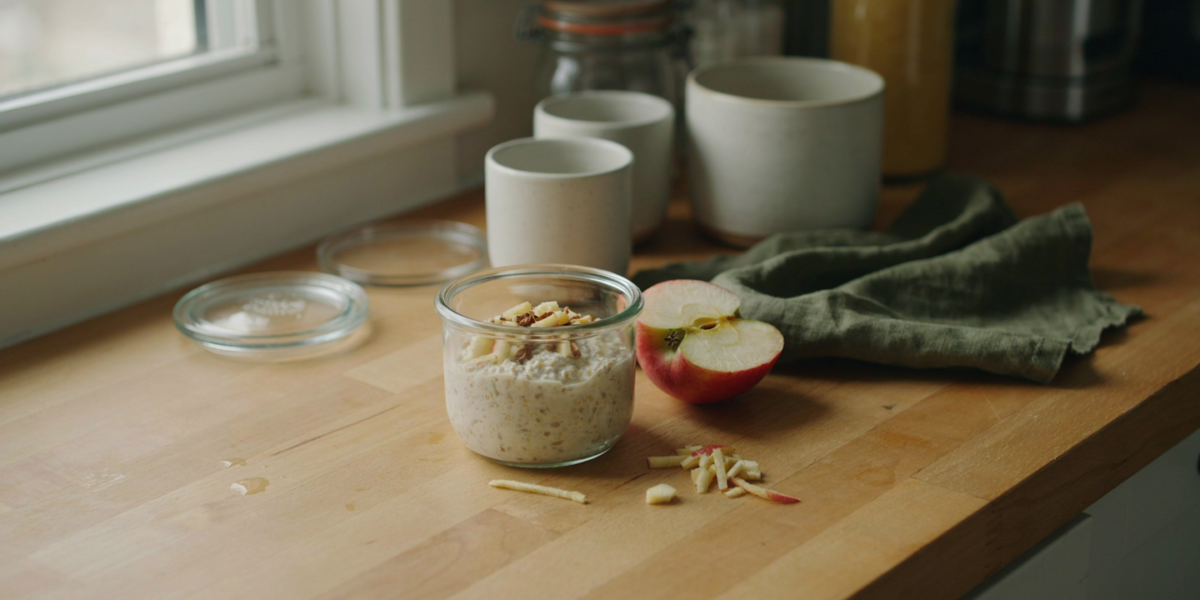
3. Apple pie
Grate half an apple, skin on, straight into the base. Add 1/2 teaspoon cinnamon and a pinch of nutmeg. Grated apple holds up surprisingly well; it softens into the oats rather than browning on top, because it’s covered by the milk.
This is the jar that tastes best on day three, once the apple has had time to sweeten everything around it.
4. Blueberry and lemon
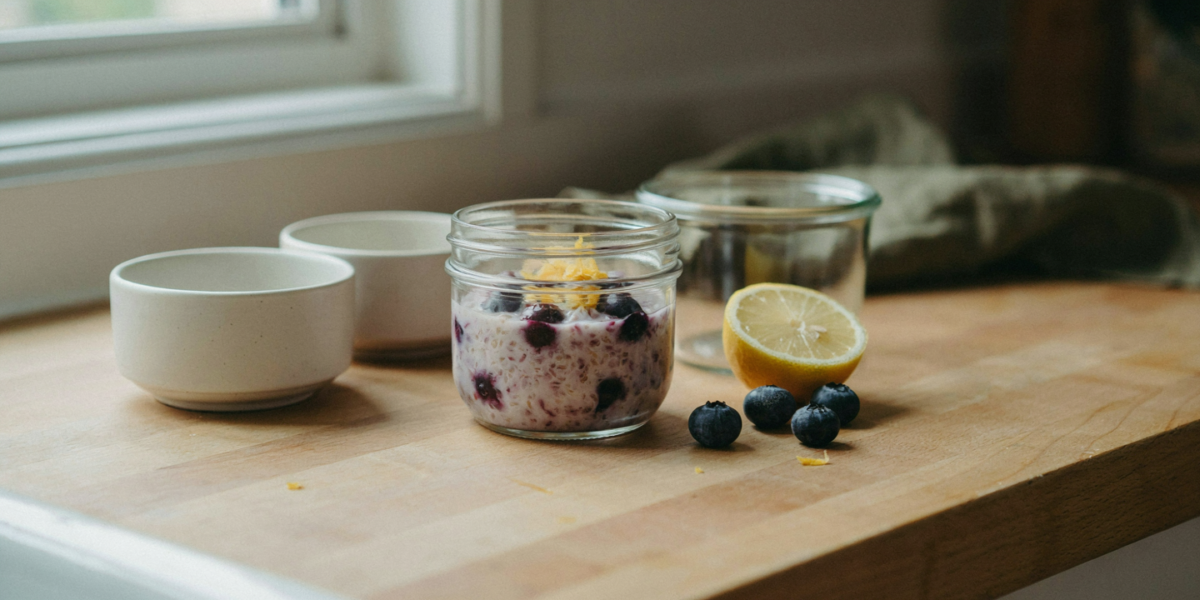
Add 1/3 cup frozen blueberries and the zest of half a lemon. Frozen berries are the better choice here, not a compromise: they thaw into the oats overnight and turn the whole jar lavender, where fresh berries sit on top and stay separate.
Skip the lemon juice. Acid and milk in a sealed jar for four days is not a combination that improves.
5. Chocolate
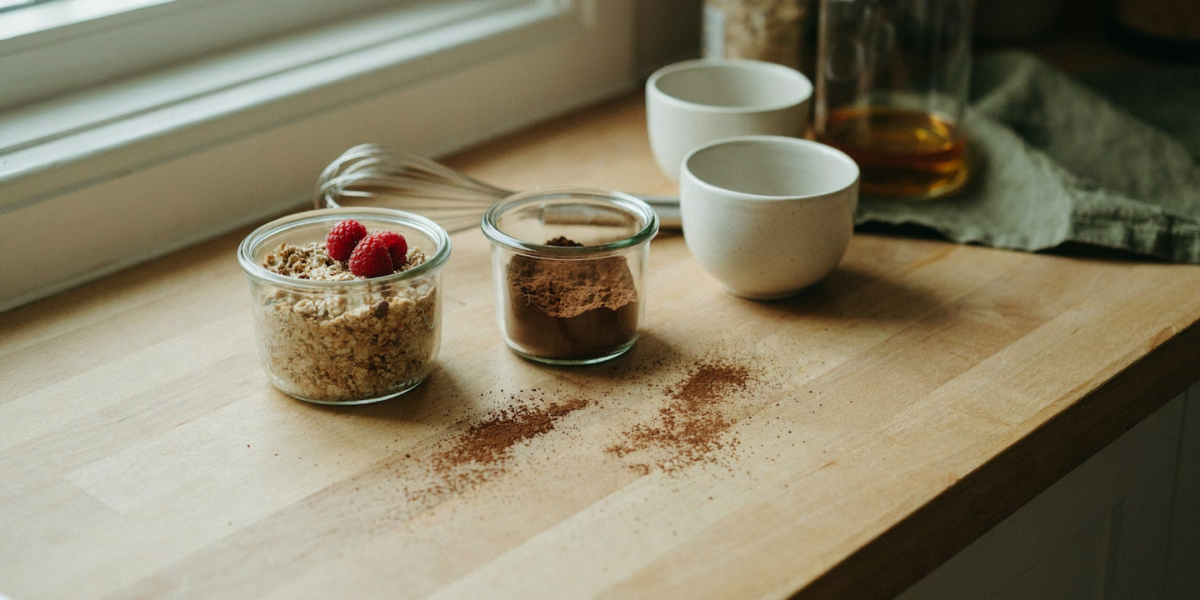
Add 1 tablespoon unsweetened cocoa powder and an extra teaspoon of maple syrup, since cocoa is bitter on its own. Whisk the cocoa into the milk first; stirred straight into the oats, it forms dry pockets that never quite dissolve.
A few raspberries on top in the morning cut the richness.
6. Carrot cake
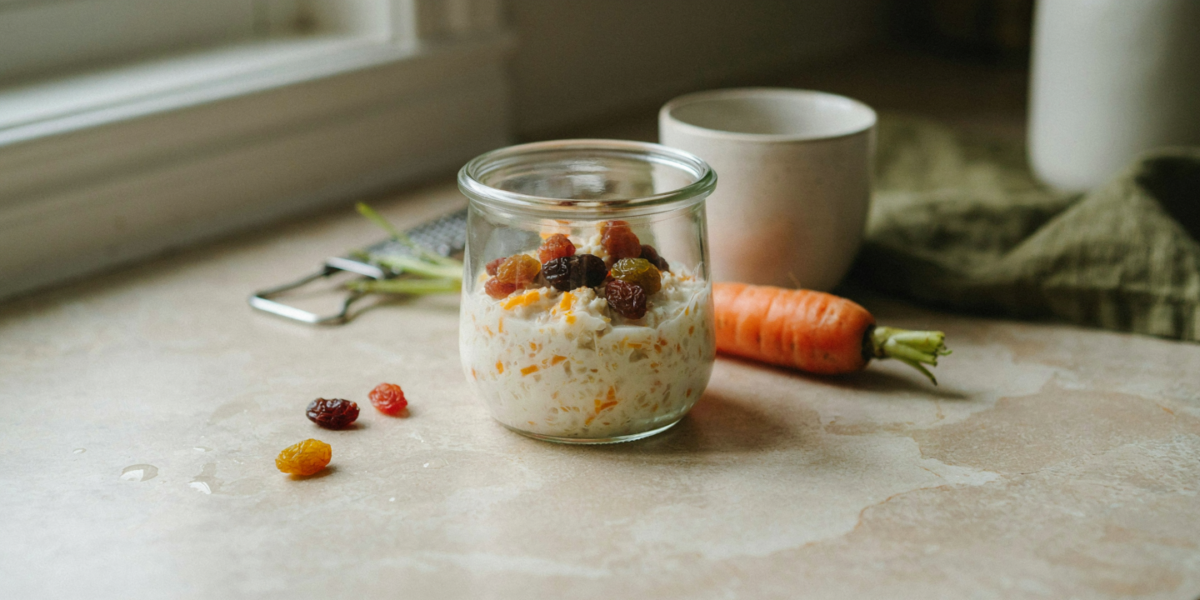
Grate a small carrot, about 1/4 cup, into the base. Add 1 tablespoon raisins, 1/2 teaspoon cinnamon and a pinch of ginger. The raisins plump up overnight and do the sweetening, so you can cut the maple syrup in half.
It sounds like a novelty. It’s the one people ask for again.
7. Mango and coconut
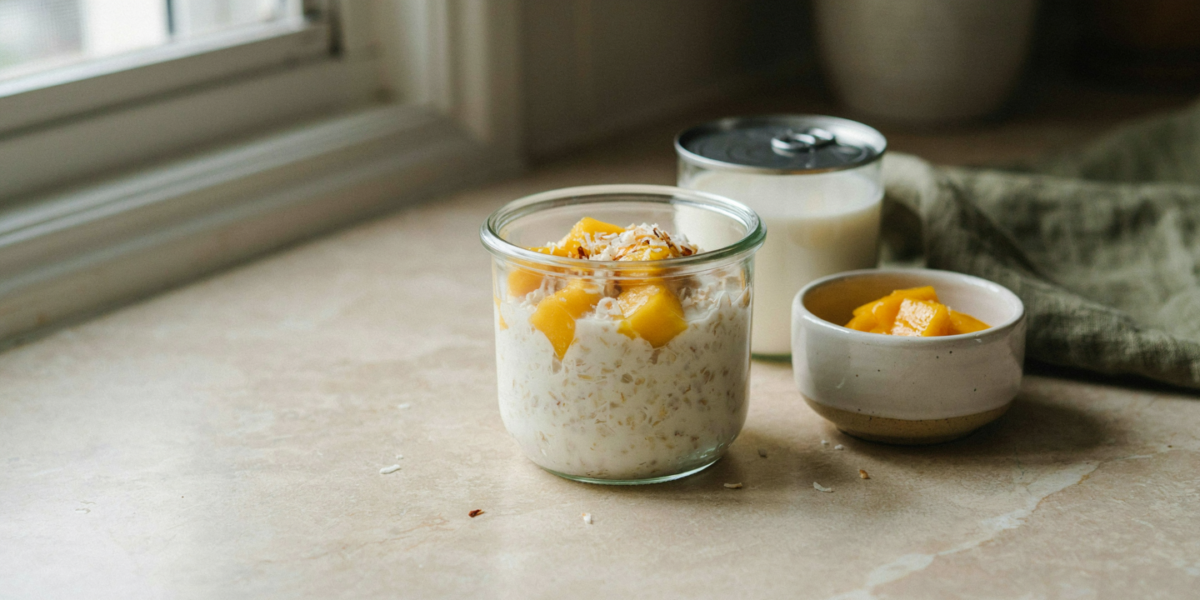
Swap the milk for canned light coconut milk and add 1/3 cup frozen mango chunks. Like the blueberries, frozen mango thaws into the jar and releases its juice. A spoon of toasted coconut on top in the morning finishes it.
Full-fat coconut milk works but sets almost solid in the refrigerator. Use light, or cut full-fat half and half with regular milk.
What We Would Skip
Seven jars on Sunday. Overnight oats are safe and pleasant for about four days; after that the texture goes soft and slightly sour, and the last jar is the one that gets thrown out. Make four, and make a second batch on Wednesday night if you want them all week.
Fresh fruit that browns, anything crunchy, and lemon juice in the jar. All three are better added on the morning you eat it.
Tiny decorative jars. A half-pint jar is too small once the oats swell; you want at least a 12-ounce jar, or a pint jar if you add fruit. We wrote more about what to store them in in our notes on meal prep containers.
Where We Would Start
Make four jars of the vanilla-cinnamon base on Sunday night. Eat two plain with different toppings, and turn the other two into apple pie before they go in the refrigerator. By Thursday you’ll know which flavor you want to make four of next week.
If overnight oats become a habit, they’re the easiest first step into breakfast meal prep, and they fit into the same Sunday session as the rest of our meal prep for the week.
Questions We Get Asked
How long do overnight oats last in the fridge?
Up to four days in a sealed container. They’re safe a little past that in most cases, but the texture turns soft and slightly sour, which is why we stop at four.
Do overnight oats have to be refrigerated?
Yes. They’re made with milk and yogurt, so they belong in the refrigerator from the moment they’re mixed, and they shouldn’t sit out for more than two hours before you eat them.
Can you eat overnight oats warm?
Yes. Microwave the jar without the lid for about a minute, stir, and add another 30 seconds if needed. A splash of milk loosens them after heating.
Is it safe to eat oats without cooking them?
Rolled oats are steamed and flattened during processing, which is why they’re sold as ready to soak and eat. Soaking them overnight softens them; it doesn’t need to cook them.
Can you use quick oats or steel-cut oats?
Quick oats work for a jar you’ll eat the next morning, but they turn to paste by day two. Steel-cut oats stay firm and chewy even after a night in milk. For jars that need to last four days, rolled oats are the reliable choice.
Can you make overnight oats without yogurt?
Yes. Use 2/3 cup milk instead of 1/2 cup and keep the chia seeds, which do the thickening the yogurt would have done. The result is lighter and a little less creamy.
Can you freeze overnight oats?
You can, for up to about a month, but the texture suffers: the yogurt turns grainy and the oats go softer once thawed. Thaw a jar in the refrigerator overnight and stir it well. We’d rather make a fresh batch midweek than freeze them.