7 Lunch Meal Prep Ideas You Won’t Be Tired of by Wednesday
Lunch is where meal prep usually breaks. Dinner is eaten at home with a stove, breakfast is small, but lunch has to survive a bag, a commute and whatever the office microwave is like, and then it has to be something you still want on the third day.
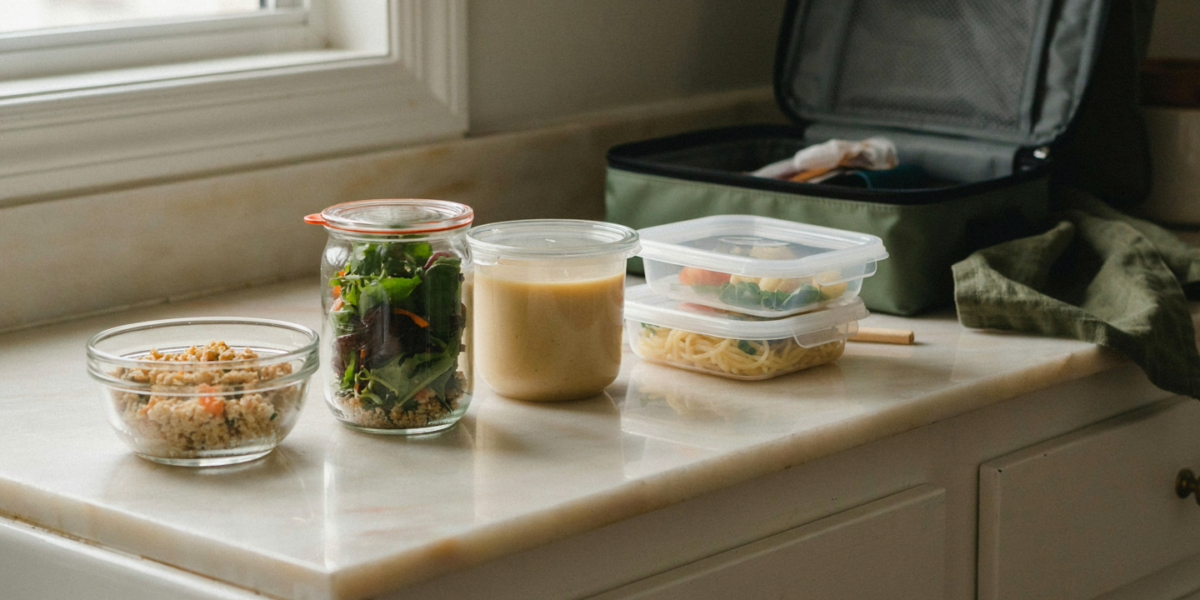
The seven lunches below are split in two: four that need reheating and three that don’t. If there’s no reliable microwave where you eat, start with the second group.
Lunch Meal Prep That Reheats, and Some That Doesn’t Need To
Two things decide whether a packed lunch works, and neither is the recipe.
Keep wet and crisp apart. Dressing, sauce and anything juicy go in a separate small container or at the bottom of a jar. Greens, crunch and herbs go on top or in their own bag. Most soggy lunches are a packing problem, not a cooking problem.
Keep it cold until you eat it. Perishable food shouldn’t sit out of the refrigerator for more than two hours. If there’s no refrigerator at work, an insulated bag with an ice pack does the job. Frozen water bottles double as ice packs and are drinkable by the afternoon.
Here’s what a realistic week looks like when two of the ideas below are combined with the freezer. It’s one Sunday session of about ninety minutes, and nothing eaten on Thursday was cooked more than four days earlier.
| Day | Lunch | Where it comes from |
|---|---|---|
| Monday | Grain bowl, peanut-lime sauce | Sunday session |
| Tuesday | Layered salad jar | Sunday session |
| Wednesday | Grain bowl, yogurt-herb sauce | Sunday session |
| Thursday | Salad jar or snack box | Sunday session |
| Friday | Soup | Freezer, moved to the refrigerator Thursday night |
The pattern matters more than the recipes: two bases, alternated, with a frozen fallback at the end of the week.
1. Grain bowls with a sauce jar (reheat)
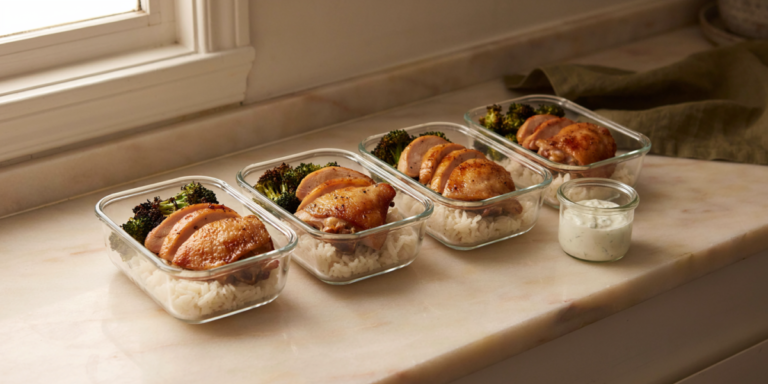
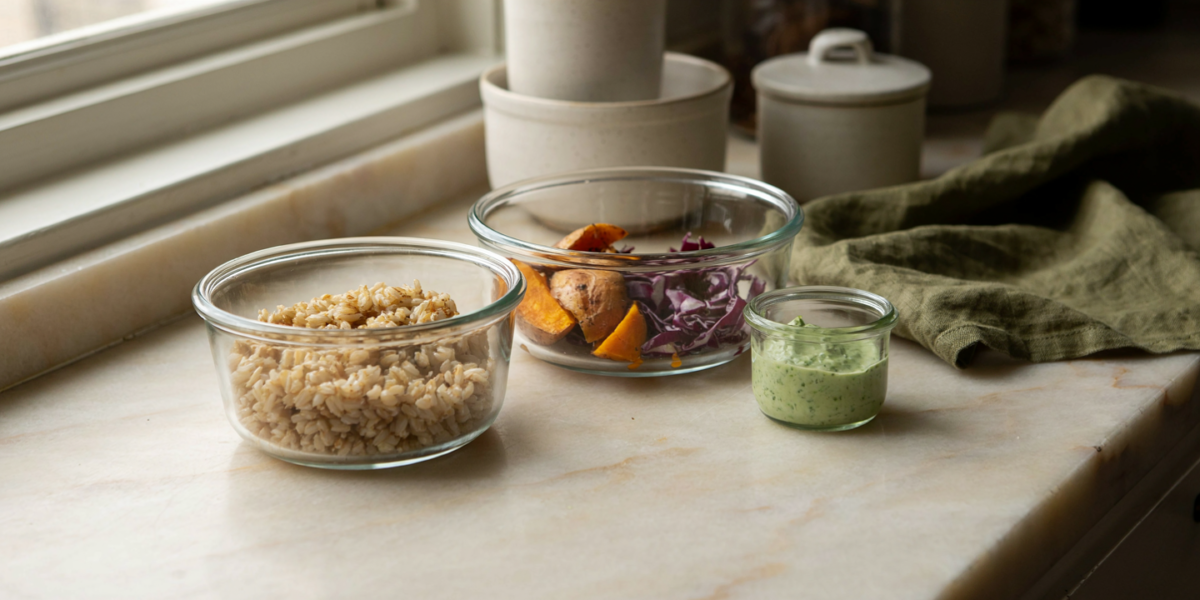
A grain, a protein, a roasted vegetable, something raw and crunchy, and a sauce. It’s the component method from our meal prep for the week, and it’s the reason we can eat grain bowls four days running: the same rice and chicken with a peanut-lime sauce on Monday and a yogurt-herb sauce on Tuesday reads as a different lunch.
Pack the sauce in a small jar and the raw crunch in its own corner, and add both after reheating.
2. Layered salad jars (no reheat)
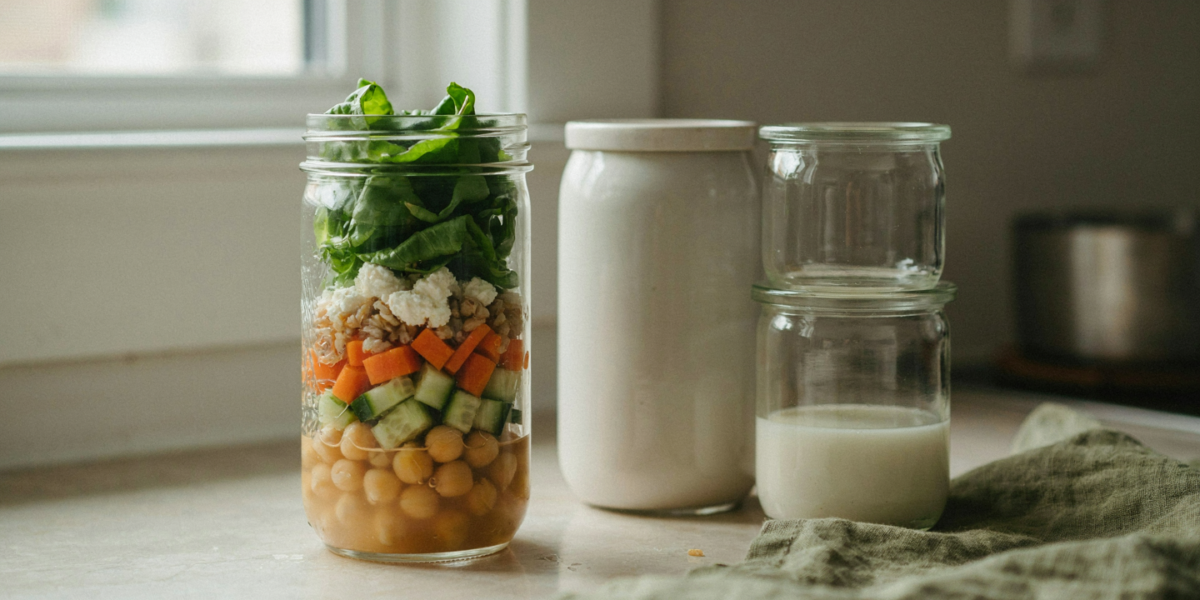
The order is the whole recipe. Dressing at the bottom, then hard vegetables that can sit in it (carrots, cucumber, peppers, chickpeas), then grains or pasta, then protein, then cheese, then greens packed in at the very top. Tip it into a bowl when you eat.
Built this way, a quart jar keeps three to four days. Built the other way round, it’s wilted by lunchtime.
3. Soup in single portions (reheat, and freezes)
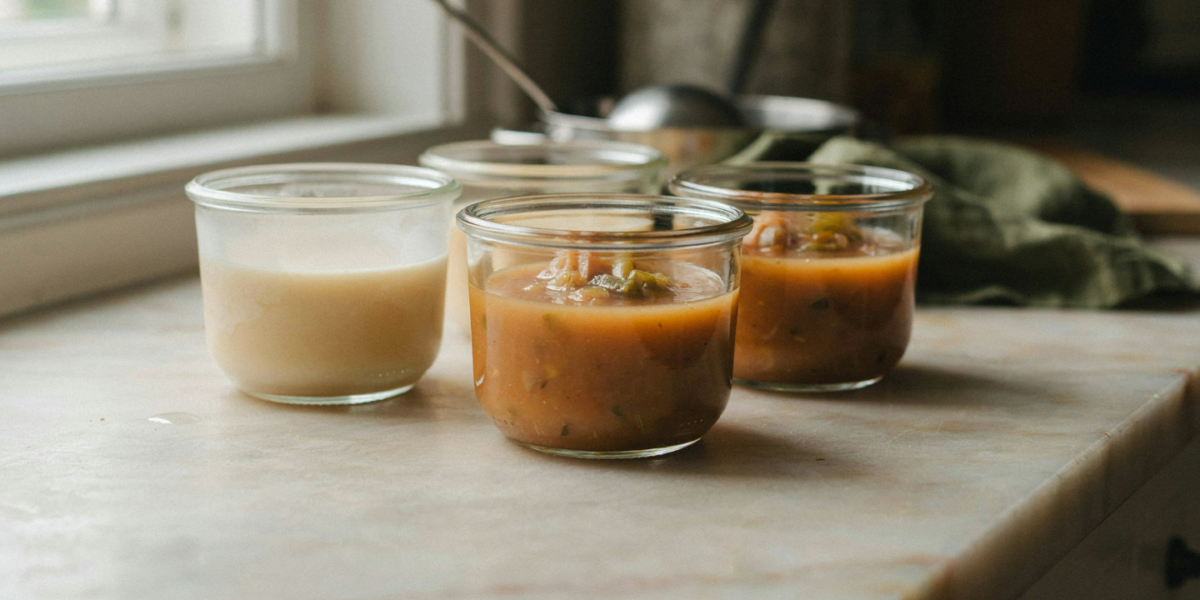
Make a pot of soup on Sunday, portion it into single containers, and freeze half. Lentil, minestrone, chicken and rice, black bean: anything brothy or thick freezes well. Leave an inch of headspace, because it expands.
A frozen container moved to the refrigerator the night before is thawed by lunch. Reheat until it’s steaming all the way through.
4. Chicken and vegetable orzo (reheat)
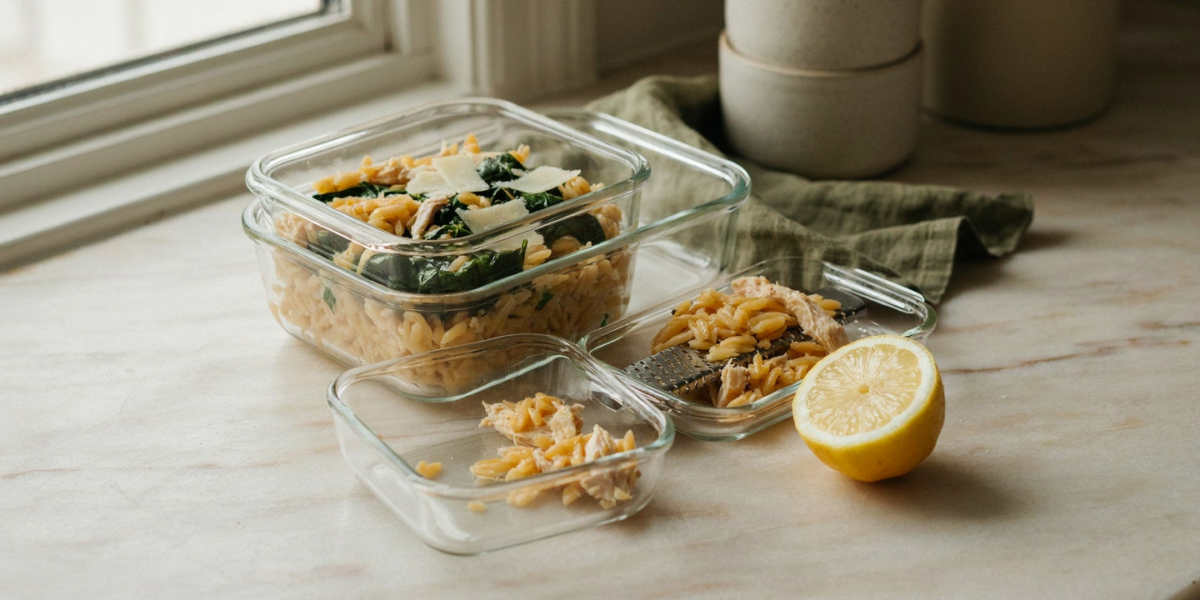
Orzo is the pasta that reheats best, because it’s small enough to absorb sauce rather than sit in it. Cook it in stock, toss it with shredded chicken, spinach, lemon zest, parmesan and a little butter, and pack it while still slightly loose. It firms up in the refrigerator.
Add a splash of water before reheating. It comes back to the texture it had on Sunday.
5. Cold peanut noodles (no reheat)
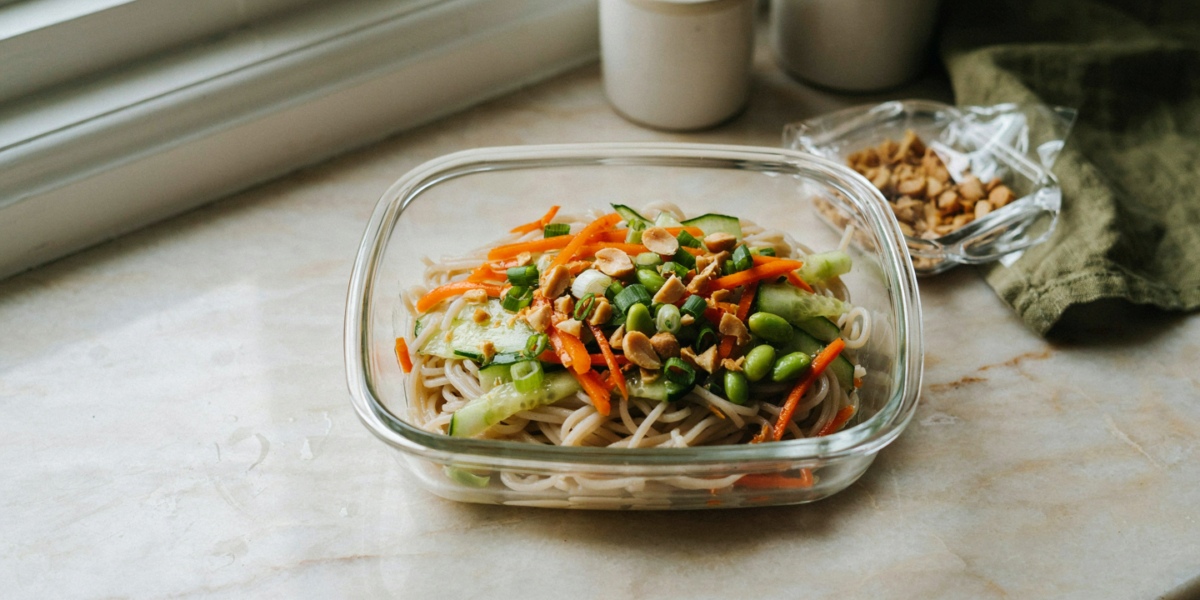
Soba or spaghetti tossed with a peanut-lime-soy sauce, shredded carrot, cucumber, edamame and green onion. It’s designed to be eaten cold, which is why it works for people with no microwave.
Toss the noodles in a little sesame oil straight after draining, so they don’t stick together overnight. Keep the peanuts or sesame seeds for the top in a separate bag.
6. The snack-box lunch (no reheat)
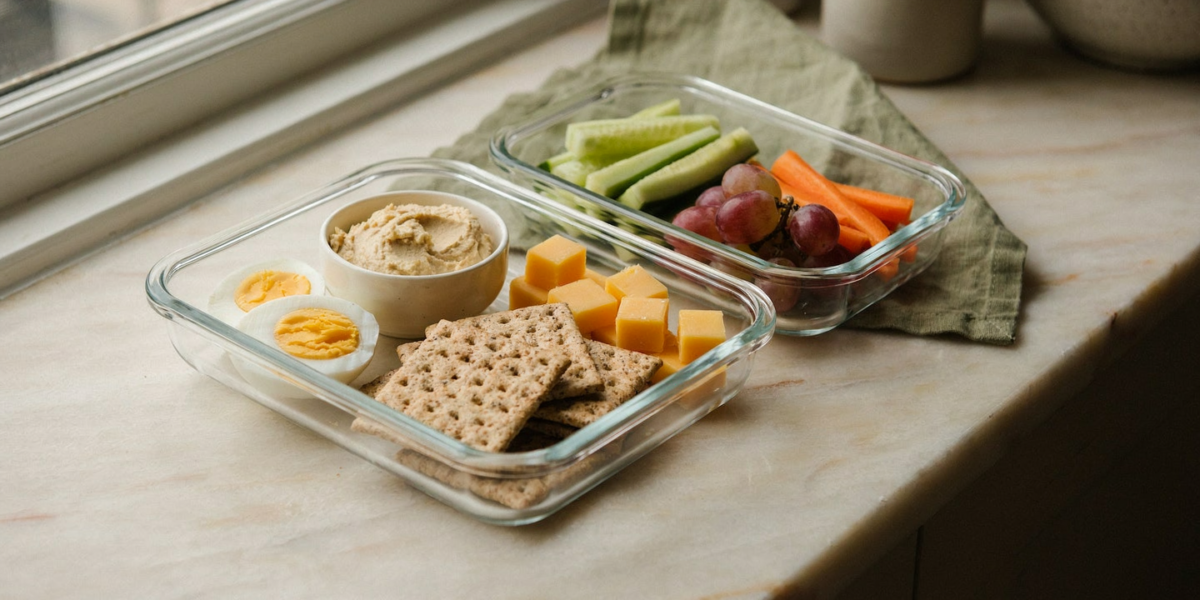
Hummus, two hard-boiled eggs, cheese, crackers, raw vegetables and fruit in a divided container. It’s the easiest lunch on this list to prep, and the one that best survives a morning when you forgot to pack anything else.
Hard-boiled eggs keep a week in their shells, and hummus keeps about a week once opened, so this is also the longest-lasting lunch here.
7. Stuffed sweet potatoes (reheat)
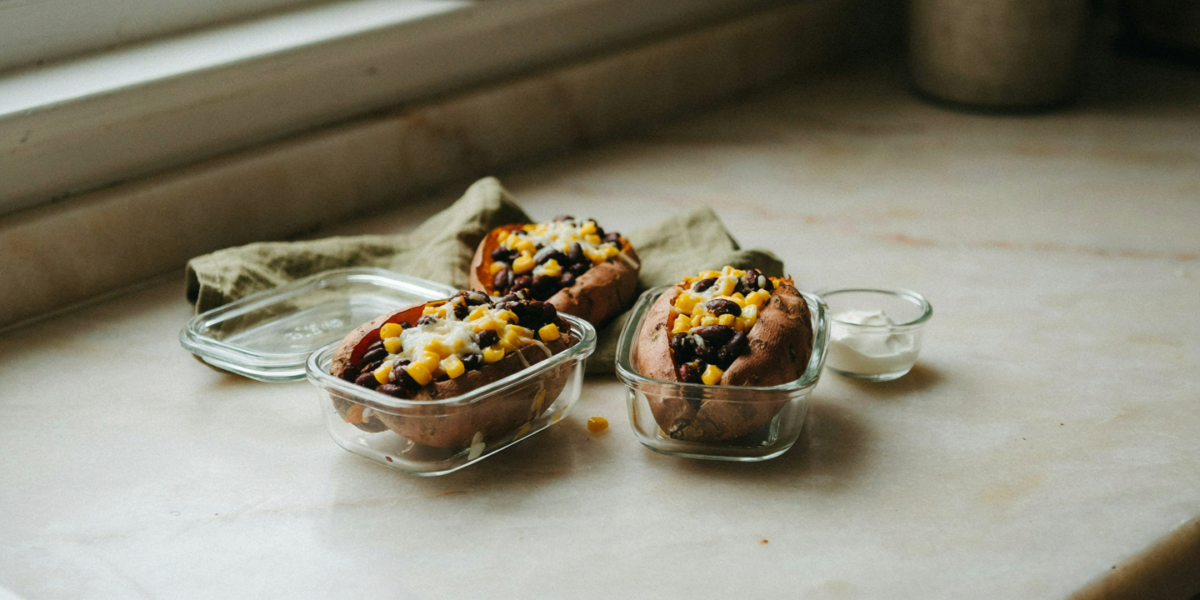
Bake sweet potatoes on Sunday, split them, and pack them with black beans, corn, a little cheese and a spoon of salsa. They reheat in two to three minutes and they’re sturdy enough to survive a bag without falling apart.
Pack the sour cream or yogurt separately. Heated yogurt splits.
What We Would Skip
Dressed salads, cut avocado and anything fried. None of them make it to lunchtime in the state you packed them.
Seven identical lunches. Two recipes alternated, or one base with two sauces, beats a single recipe five days in a row.
Buying a lunch box before you know how you eat. What you pack decides what you need: jars for salads, divided containers for snack boxes, microwave-safe containers for everything that reheats. We went through the options in our guide to meal prep containers.
Where We Would Start
If you have a microwave: a grain bowl base with two sauces, plus soup in the freezer for backup. If you don’t: salad jars and the snack box.
Either way, prep Monday to Thursday and leave Friday to leftovers or the freezer. For more options that pack well, our high protein meal prep lunches are all built to travel.
Questions We Get Asked
How long does lunch meal prep last in the fridge?
Three to four days for most cooked food. Hard-boiled eggs in their shells and opened hummus last about a week. Soup and cooked grains keep for months frozen.
How do you keep meal prep lunches from getting soggy?
Pack dressings and sauces separately or at the bottom of a jar, keep crunchy and leafy ingredients on top or in their own container, and add them after reheating.
What lunches don’t need to be reheated?
Layered salad jars, cold peanut noodles, snack boxes, and grain salads with beans or lentils. All of them are designed to be eaten cold.
Can you leave a packed lunch out until lunchtime?
Not for more than two hours without cooling. Use a refrigerator at work, or an insulated bag with an ice pack or a frozen water bottle.
What containers are best for lunch meal prep?
Glass for anything you reheat, jars for salads, and divided containers for snack-style lunches. Whatever you choose, make sure the lids seal well enough to survive a bag.
How many days of lunches should I prep?
Four. Monday through Thursday stays inside the refrigerator window, and Friday comes from the freezer or leftovers.
Can you freeze meal prep lunches?
Soups, stews, chili, cooked grains and most casseroles freeze well for two to three months. Salads, cold noodles, anything with raw vegetables and anything creamy that can split do not. Freeze in single portions so you only thaw one lunch at a time.