Meal Prep Containers: A Buyer’s Guide to What Actually Matters
Buying meal prep containers is where a lot of people start meal prep, and it’s usually the wrong place to start. The fifty-piece set in five shapes arrives, three of the shapes turn out to be useless, and the lids get separated from their bases within a month.
This is a guide to what matters when you buy containers, not a ranking of brands. We don’t have a lab and we haven’t tested every product on the shelf, so we won’t pretend to. What we can tell you is which features make a difference in daily use, and which ones are marketing.
Meal Prep Containers: Glass, Plastic or Stainless Steel?
Each material is good at something different, and the right one depends on how you’ll reheat.
| What matters | Glass | Plastic | Stainless steel |
|---|---|---|---|
| Microwave | Yes (base, not the lid) | Only if labeled microwave-safe | No |
| Oven | Base usually yes, check the label | No | Yes, without the lid |
| Weight in a bag | Heavy | Light | Light |
| Stains and smells | Doesn’t stain | Tomato and curry stain | Doesn’t stain |
| Lasts | Years, unless dropped | Until it cracks or clouds | Years |
If you reheat at work, glass is the default. If you carry lunch a long way or you don’t reheat, plastic or steel is lighter.
1. Glass: pick borosilicate or tempered, and respect temperature jumps
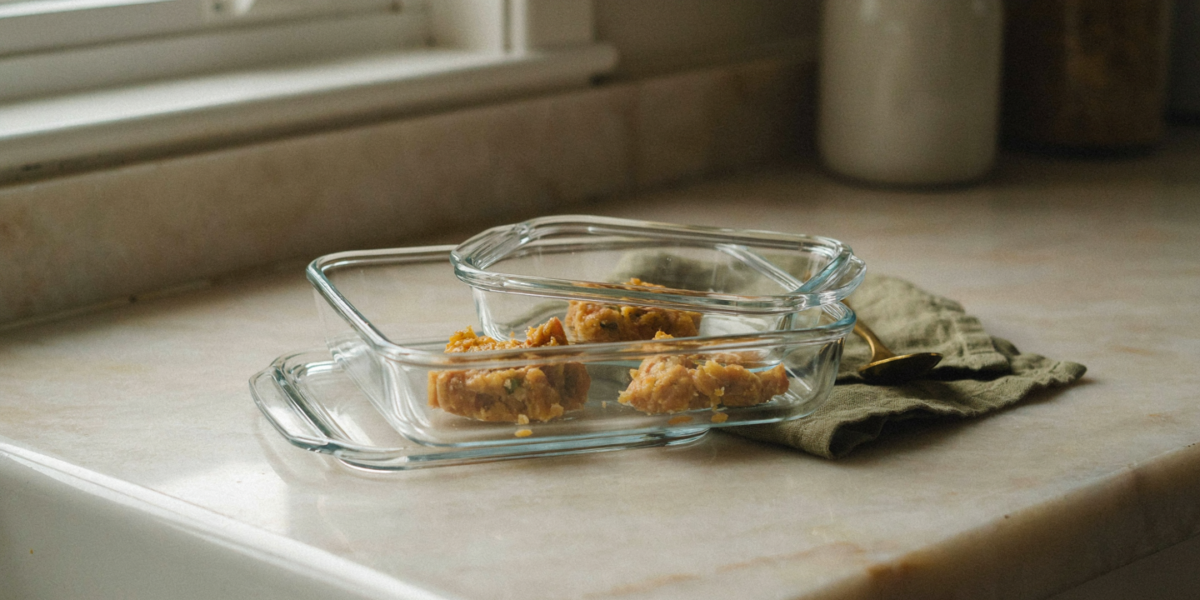
Glass containers are made either from borosilicate glass, which tolerates sudden temperature changes better, or from tempered soda-lime glass, which is tougher against knocks. Both are fine for meal prep. What breaks glass is thermal shock: a container straight from the freezer into a hot oven, or a hot dish set down on a wet, cold counter.
Let frozen glass thaw in the refrigerator before it goes anywhere hot, and check the manufacturer’s label for oven and freezer limits. Almost all glass container lids are plastic and not oven-safe.
2. Plastic: look for the microwave-safe mark, and replace it when it’s worn
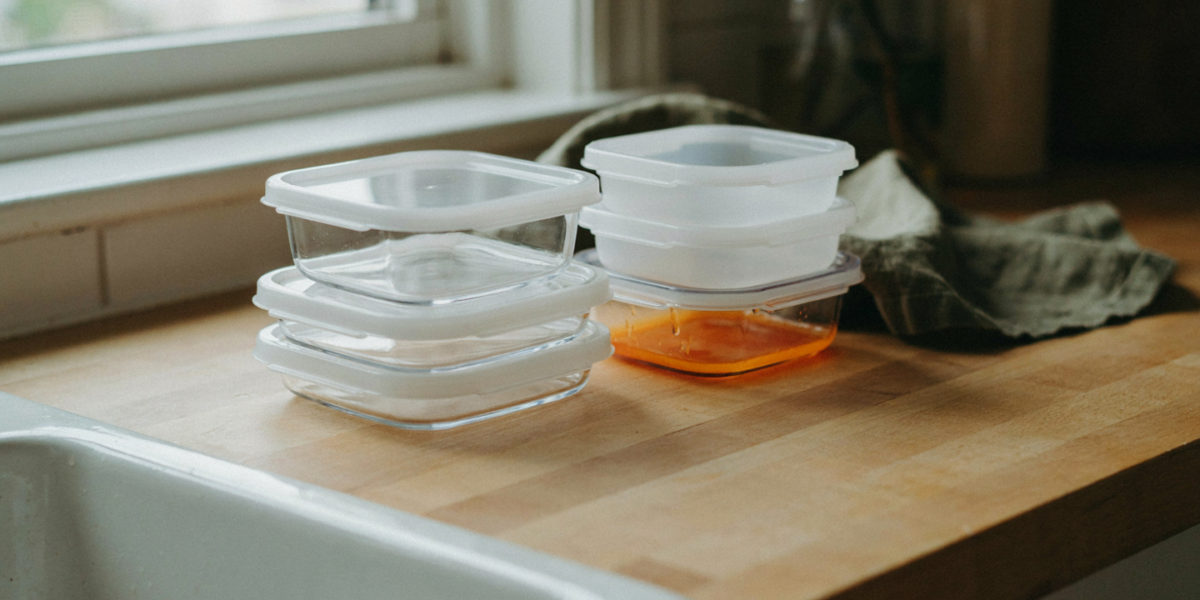
Plastic containers are light, cheap and unbreakable, which is why most people own some. Only microwave the ones labeled microwave-safe, and don’t microwave with the lid snapped shut. When a plastic container is cracked, deeply scratched or cloudy, replace it; it’s harder to clean and more likely to leak.
Tomato sauce and turmeric stain plastic orange. That’s cosmetic, but it’s a good reason to keep plastic for cold lunches and glass for anything red.
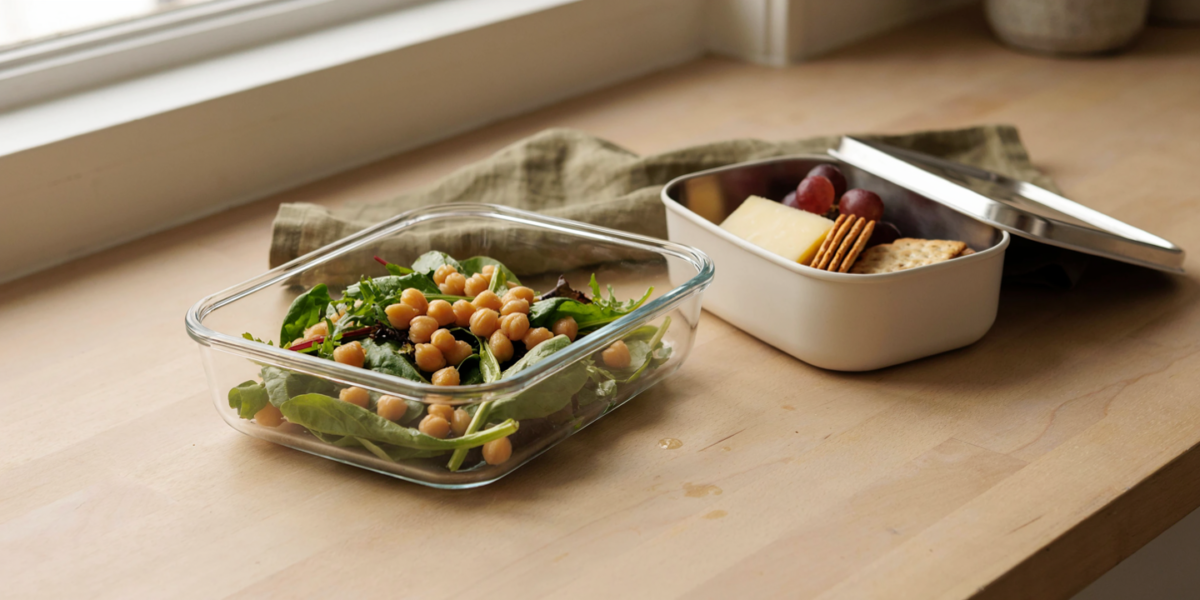
3. Stainless steel: for lunches that travel and don’t reheat
Steel is light, doesn’t stain, doesn’t hold smells and lasts for years. It can’t go in the microwave, which rules it out for most office lunches. For salads, snack boxes and anything eaten cold, it’s the most durable option there is.
4. Lids decide whether it leaks
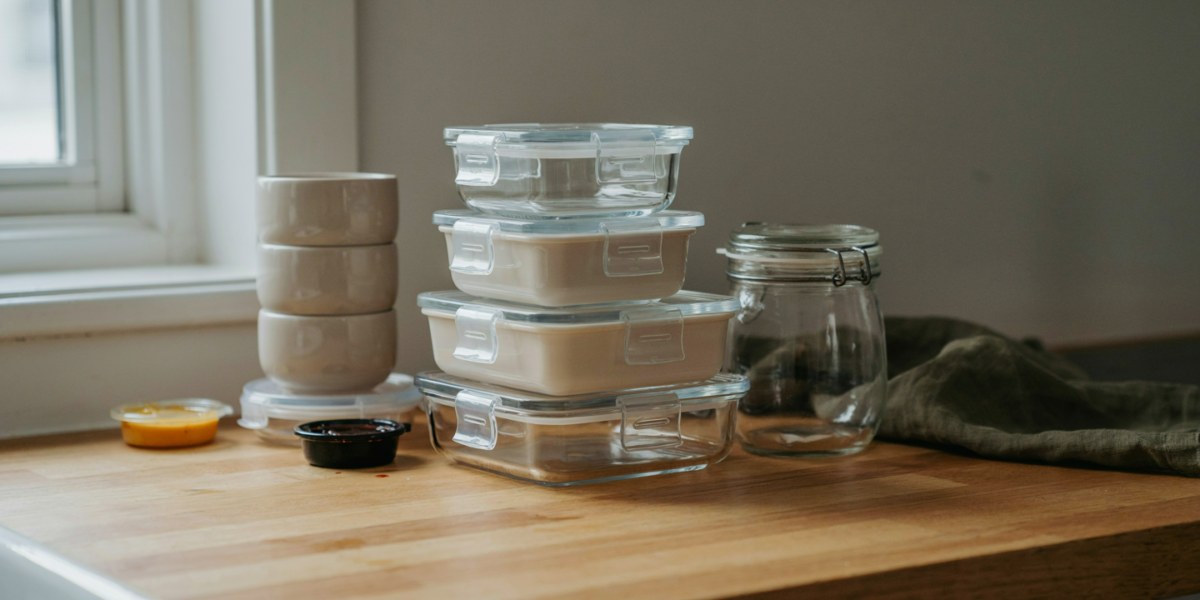
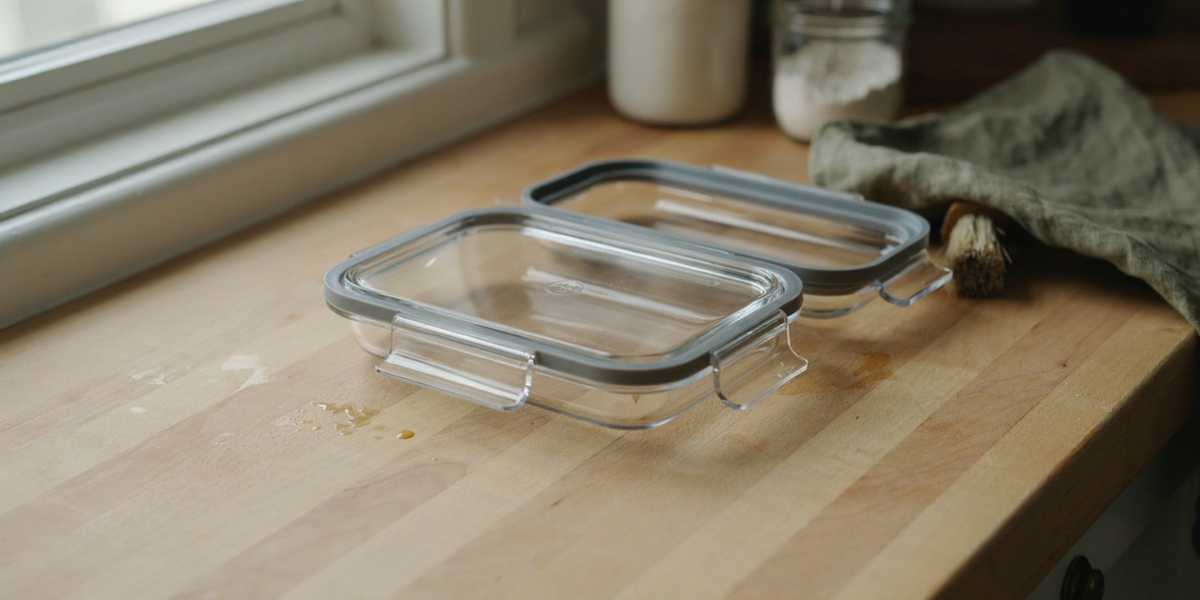
The most important part of a container is the lid, and it’s the part most people check last. Four-latch snap lids with a silicone gasket are the most reliable against leaks in a bag. Press-on lids are fine for the refrigerator and unreliable in transit.
Check whether the gasket comes out. A gasket that can’t be removed traps moisture underneath and eventually grows mold you can’t reach.
5. Size: three cups for a meal, one cup for sauce
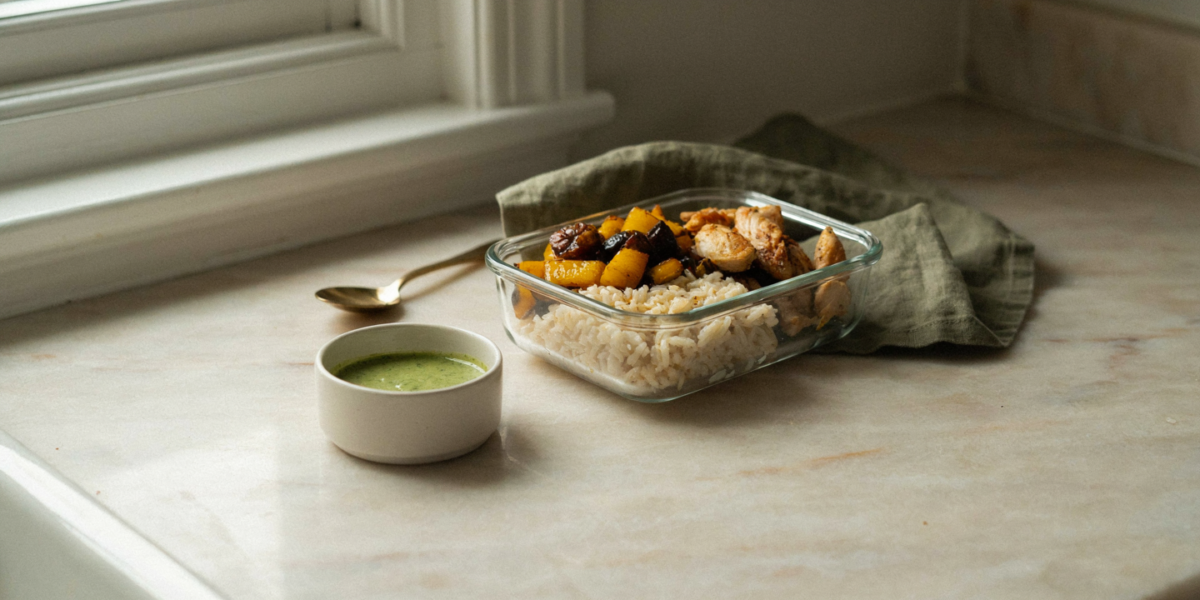
A container of around three cups (about 700 ml) holds a full lunch or dinner portion with room to stir. Half-cup to one-cup containers hold sauces, dressings, yogurt and snacks. Those two sizes cover almost everything.
Very large containers are for batch storage, not portions. Very small ones get lost.
6. Compartments: useful for some meals, a nuisance for most
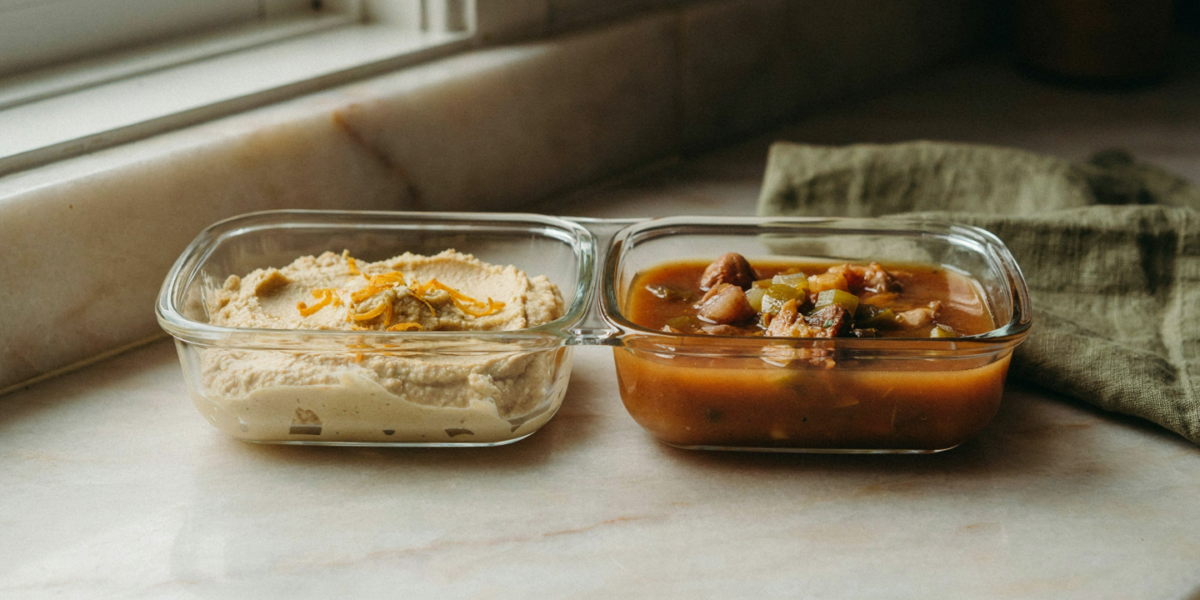
Divided containers keep a snack box tidy and stop a wet ingredient from soaking a dry one. They’re awkward for anything saucy or anything you’d stir, and they don’t stack as well as plain shapes.
A few divided containers for snack-style lunches, and plain ones for everything else, is the balance that works.
7. One shape that stacks
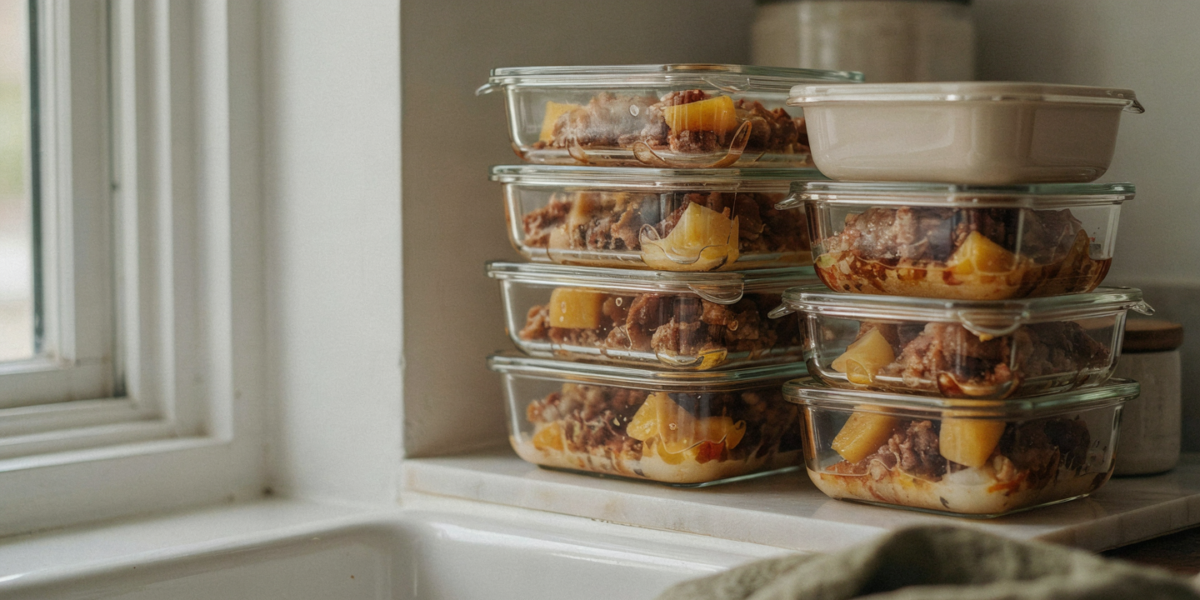
Buy several of one container rather than a few of many. Matching bases stack in the refrigerator, all the lids fit all the bases, and nothing ends up orphaned at the back of the cabinet.
Rectangular containers use refrigerator space better than round ones. Round ones reheat a little more evenly.
8. Jars for salads and oats
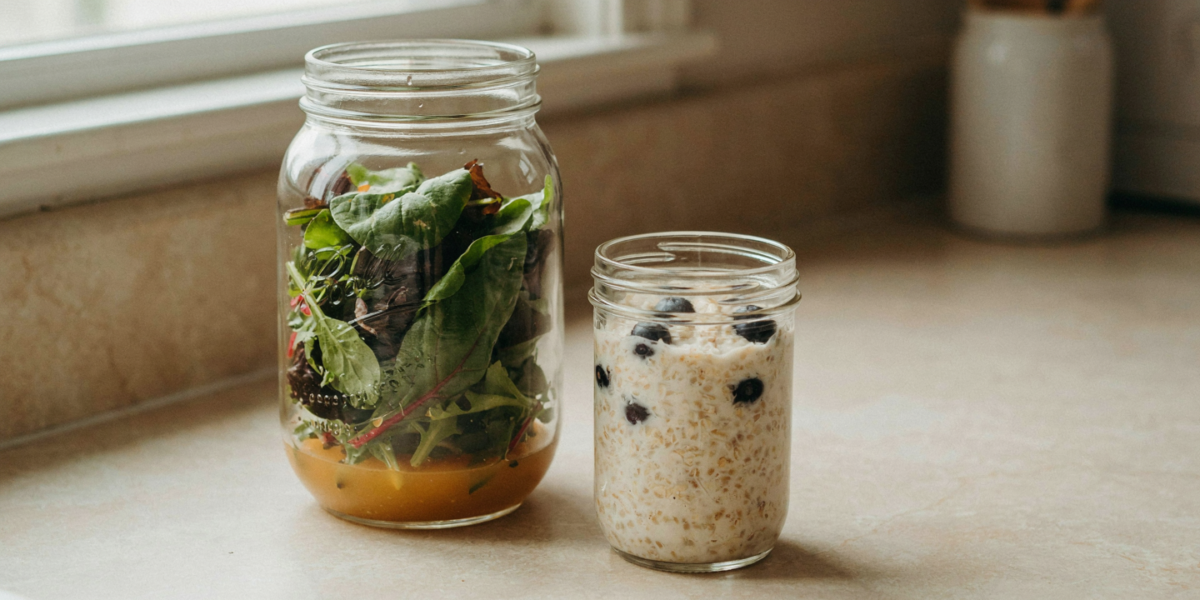
Wide-mouth glass jars are the right container for two things: layered salads and overnight oats. The height keeps dressing and greens apart, and a pint or quart jar is easy to shake or tip into a bowl. They’re also cheap and easy to replace.
For recipes, see our overnight oats and the salad jars in our lunch meal prep ideas.
What We Would Skip
Fifty-piece sets. They’re mostly lids and shapes you won’t use. Ten containers of one size and four small ones do more.
Containers without a clear microwave-safe or oven-safe marking, if you plan to heat food in them. If the label doesn’t say, don’t assume.
Buying containers before you’ve done a few weeks of meal prep. Cook with what you have first, then buy for the meals you actually make.
Where We Would Start
Eight to ten three-cup glass containers with four-latch lids and removable gaskets, and four small containers for sauces. Add a few wide-mouth jars if you like salads or overnight oats. That covers four days of lunches for one person with room to spare, or two days for two.
Then use them for a month with the sequence from our meal prep for the week before buying anything else.
Questions We Get Asked
Are glass or plastic meal prep containers better?
Glass is better for reheating, doesn’t stain and lasts longer. Plastic is lighter and unbreakable. Many people use glass for anything they heat and plastic or steel for cold lunches.
Can glass meal prep containers go from the freezer to the oven?
Not directly. Sudden temperature changes can crack glass. Thaw frozen glass containers in the refrigerator first, and check the manufacturer’s instructions for oven limits. Plastic lids aren’t oven-safe.
What size meal prep containers should I buy?
Around three cups (about 700 ml) for a full meal, and half-cup to one-cup containers for sauces and snacks. Those two sizes cover most needs.
How many meal prep containers do I need?
For one person prepping four days of lunches, eight to ten meal-size containers and a few small ones are enough, with spares for the ones in the dishwasher.
Is it safe to microwave plastic containers?
Only if they’re labeled microwave-safe. Remove or vent the lid, and replace containers that are cracked, warped or heavily scratched.
How do I stop meal prep containers from leaking?
Use lids with four latches and a silicone gasket, keep the gasket clean and seated properly, and don’t overfill. Pack soups and sauces in containers you’ve tested upside down at home first.
How do you get stains and smells out of plastic containers?
A paste of baking soda and water left in the container for a few hours takes out most smells. Tomato stains often fade if the clean container is left in direct sunlight for a day. Stains that stay are cosmetic, but they’re a sign the container is a good candidate for cold food only.
Do meal prep containers need to be dishwasher-safe?
It helps. Most glass bases and many plastic containers are dishwasher-safe, but lids and gaskets often do better on the top rack or washed by hand, since high heat can warp them over time. Check the label and take the gasket out before washing.