Healthy Meal Prep: 7 Boxes for the Week and How to Roast Them
Healthy meal prep has a reputation for being dull: the same chicken, the same rice, the same broccoli, five days in a row. It doesn’t have to be. Most healthy boxes follow one pattern, a lean protein, a whole grain or starchy vegetable and at least one more vegetable, and changing just one of the three is enough to make a week feel different.
The other problem is time. If prep takes a whole Sunday, it doesn’t happen. The boxes below are built so most of the cooking happens on two sheet pans and one pot.
Healthy Meal Prep Is a Formula, Not a Recipe
Each box here is roughly a palm-sized portion of protein, a cupped handful of grain or starch, and half the box in vegetables. That’s a guide, not a rule; adjust portions to your appetite and what your doctor or dietitian has told you.
Two food safety rules apply to every box:
- Cook to temperature: 165°F for chicken and ground turkey, 145°F for salmon and shrimp. An instant-read thermometer is the cheapest tool in meal prep.
- Cool fast and keep cold: get cooked food into the fridge within two hours, ideally sooner. Most cooked boxes keep 3 to 4 days. Freeze anything you won’t eat by then.
1. Chicken, brown rice and broccoli
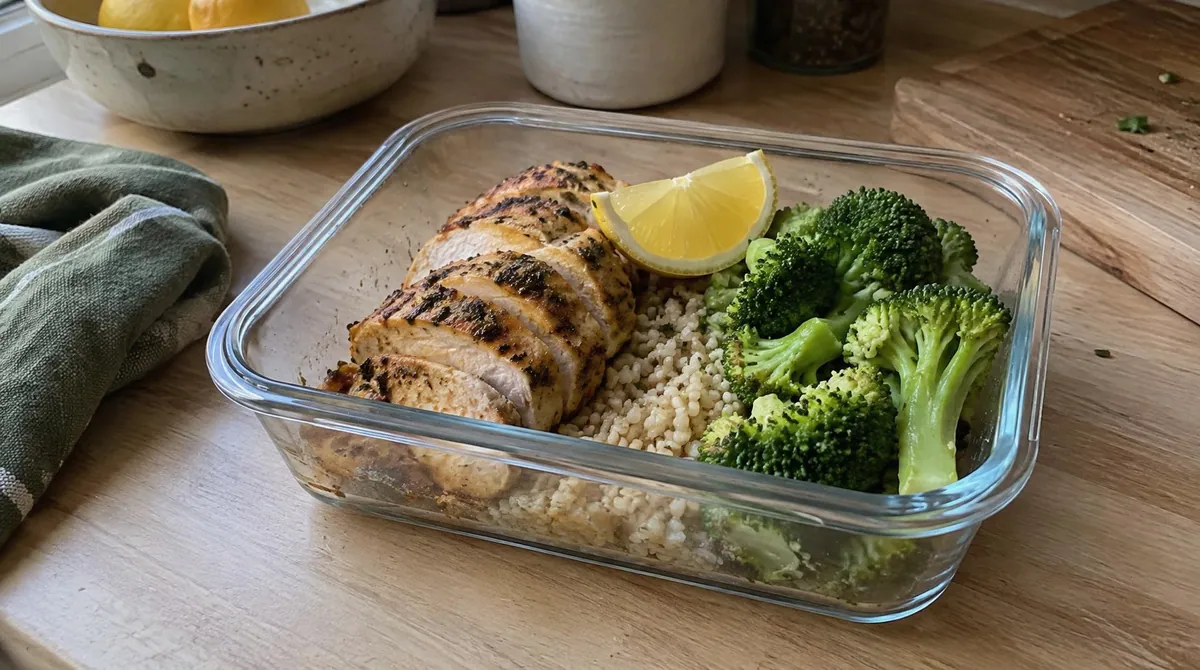
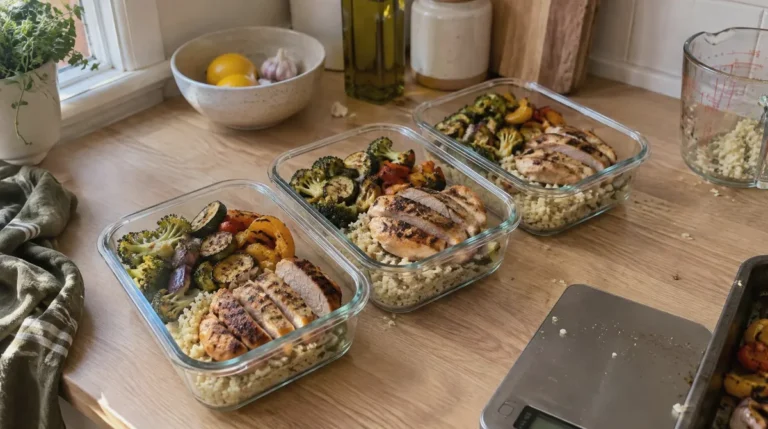
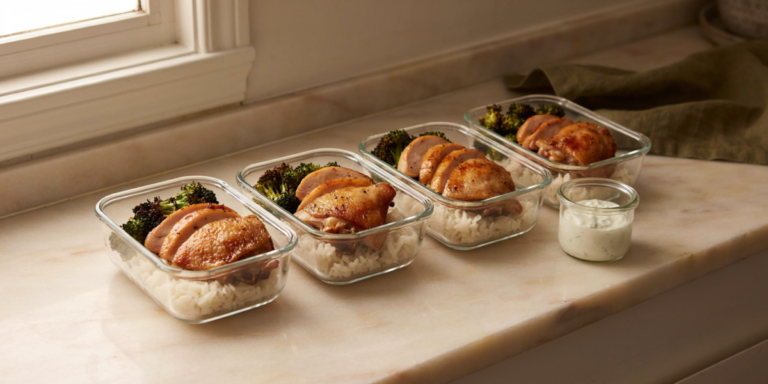
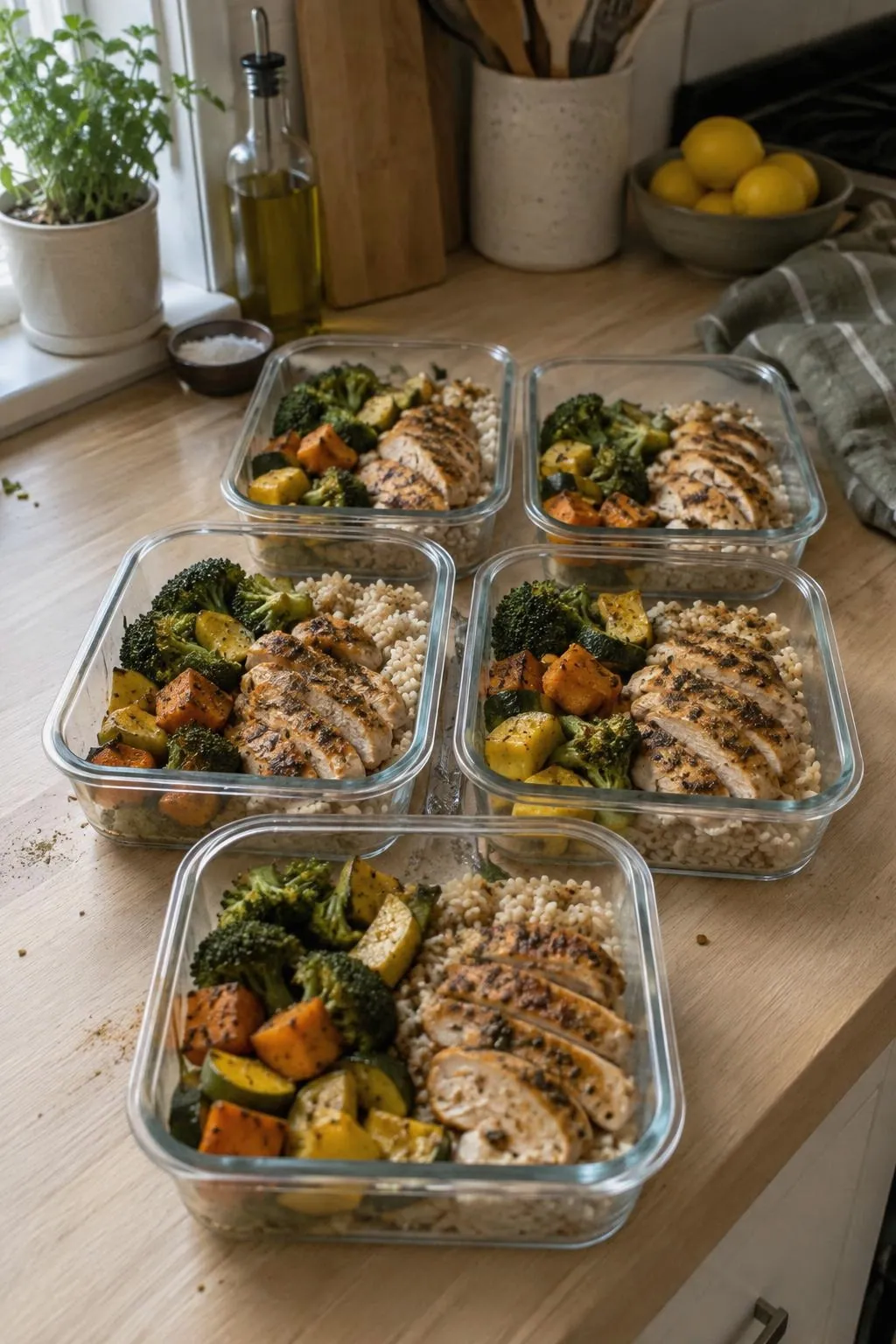
The classic for a reason. Roast seasoned chicken breasts or thighs at 425°F for 20 to 25 minutes, until they reach 165°F inside. Thighs stay juicier over four days; breasts are leaner.
Cook brown rice in a pot or rice cooker, then spread it on a tray to cool quickly before boxing. Steam or roast the broccoli and slightly undercook it, since it softens further when reheated. A lemon wedge in each box makes a real difference on day three.
2. Salmon, quinoa and green beans
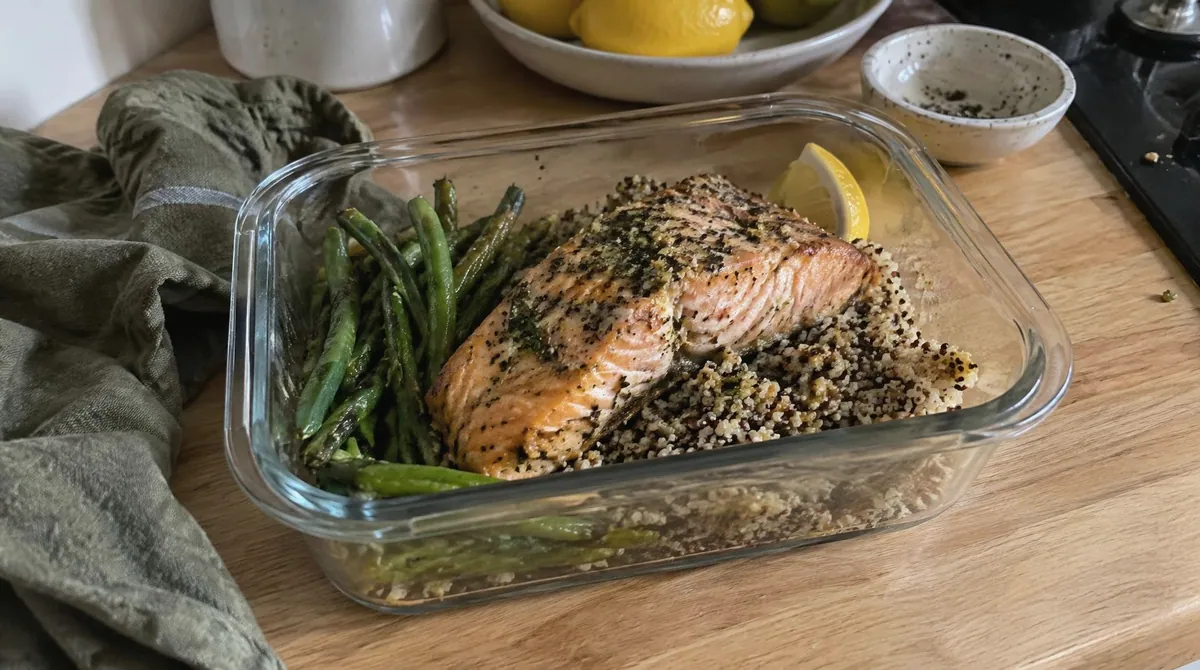
Bake salmon fillets at 400°F for 12 to 15 minutes, until they flake and reach 145°F. Quinoa cooks in about 15 minutes; rinse it first to remove bitterness. Roast or blanch the green beans.
Cooked fish holds well for 3 to 4 days, but it tastes best in the first two or three. Plan salmon for early in the week, or eat it cold flaked over the quinoa if you’d rather not reheat it at work.
3. Turkey taco bowls
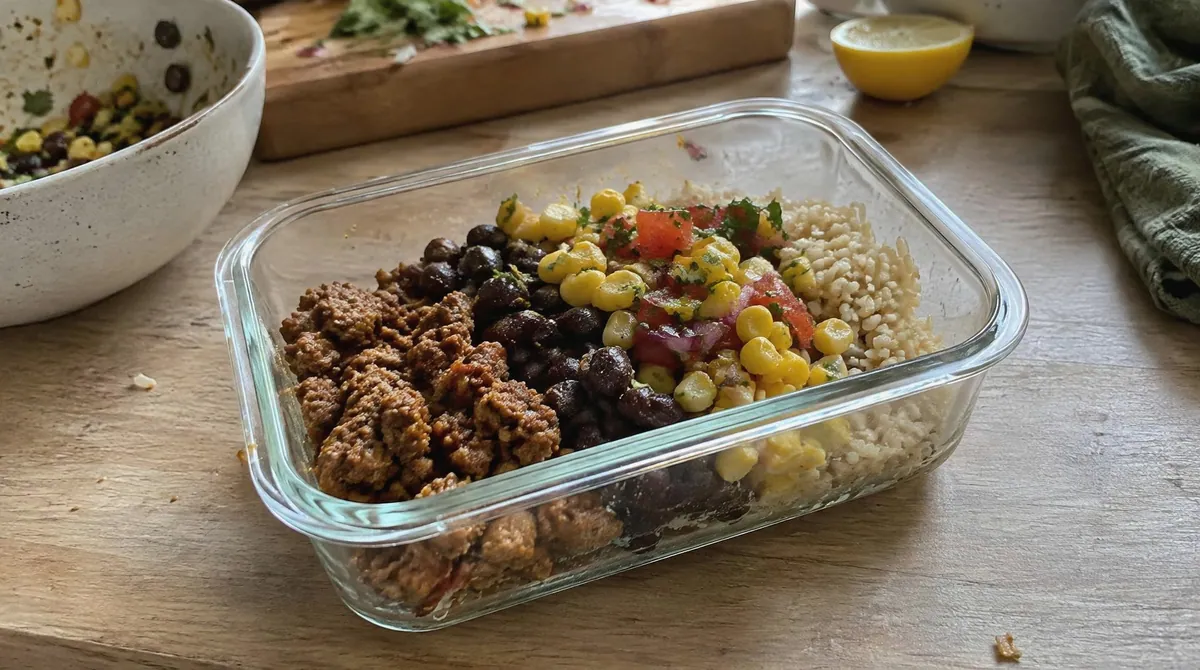
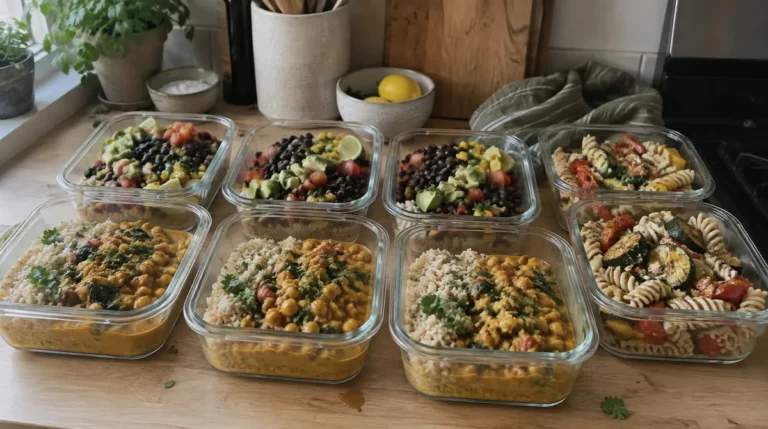
Brown lean ground turkey with onion, chili powder, cumin and garlic until it reaches 165°F. Add a can of rinsed black beans at the end to warm through. Serve over brown rice with corn salsa.
Keep fresh toppings separate: salsa, a spoon of plain Greek yogurt instead of sour cream, chopped cilantro, a lime wedge. Added after reheating, they make it taste freshly made.
4. Chickpea and roasted vegetable bowls
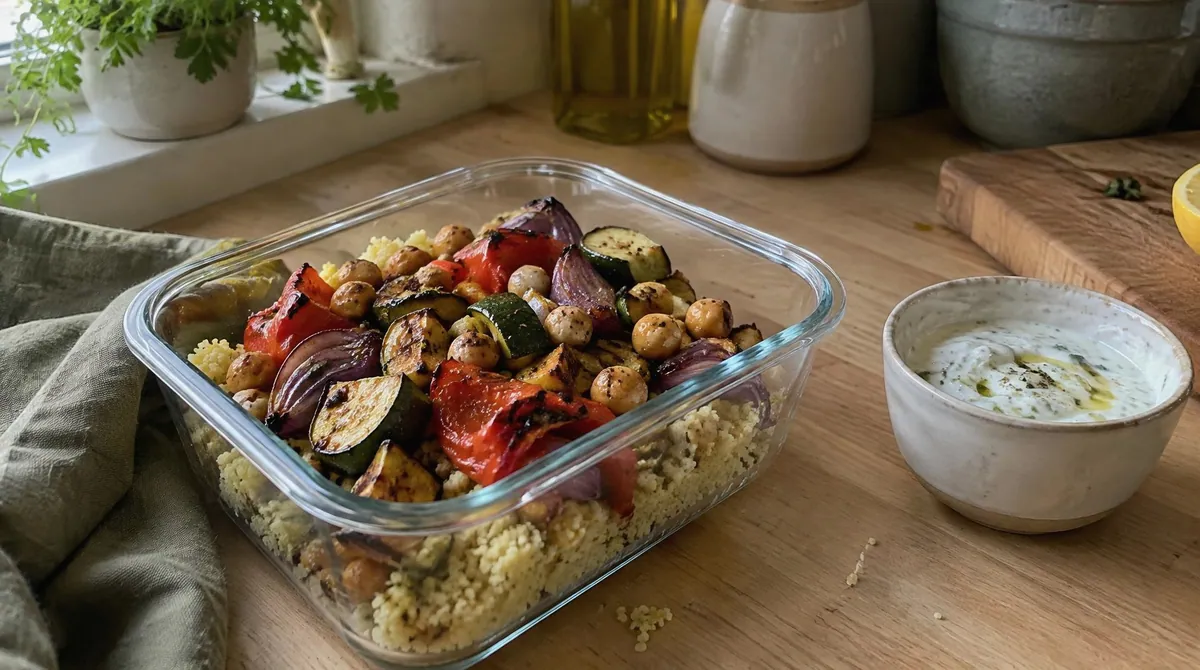
Drain and dry a can of chickpeas, toss them with olive oil, paprika and salt, and roast at 425°F alongside zucchini, red pepper and red onion. Serve over couscous, which only needs boiling water and five minutes.
Add a small cup of yogurt sauce: plain yogurt, lemon, garlic and salt. Roasted chickpeas soften in the fridge; if you like them crisp, keep a handful aside in a jar and add them before eating.
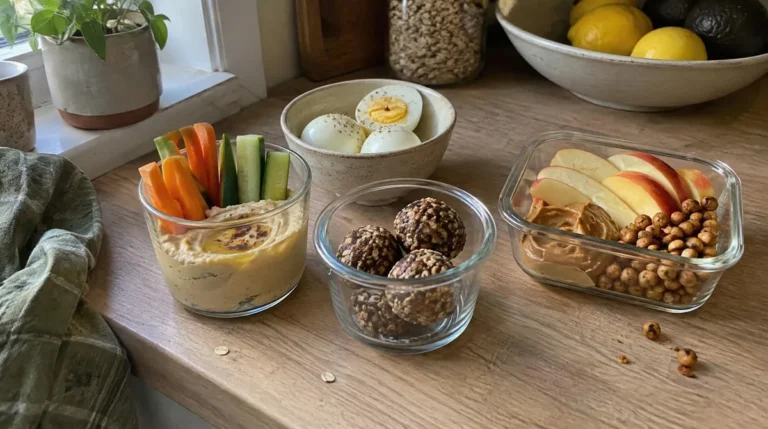
5. Egg and vegetable breakfast boxes
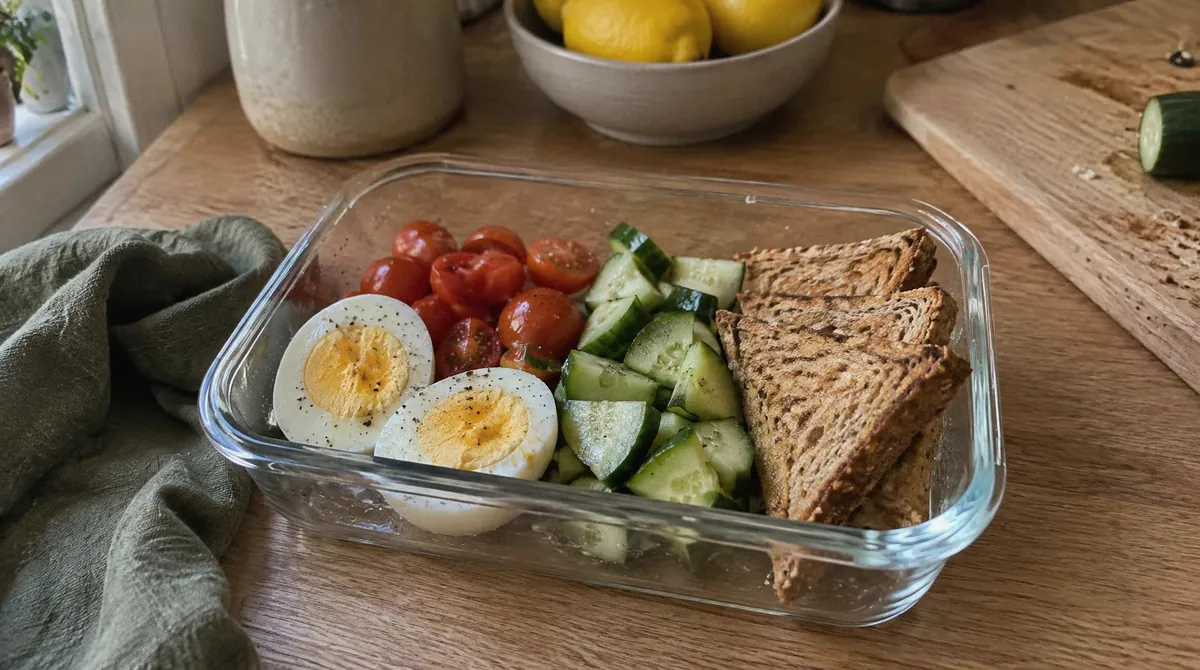
Hard-boil a batch of eggs: boil, then let them sit covered off the heat for 10 to 12 minutes, then into cold water. Hard-boiled eggs in the shell keep about a week in the fridge; once peeled, eat them within a few days.
Pack two eggs with cherry tomatoes, cucumber and a slice of whole grain toast or crackers. Keep the bread in a separate bag so it doesn’t go soft. These are breakfast boxes you can eat at your desk with no microwave.
6. Shrimp stir-fry
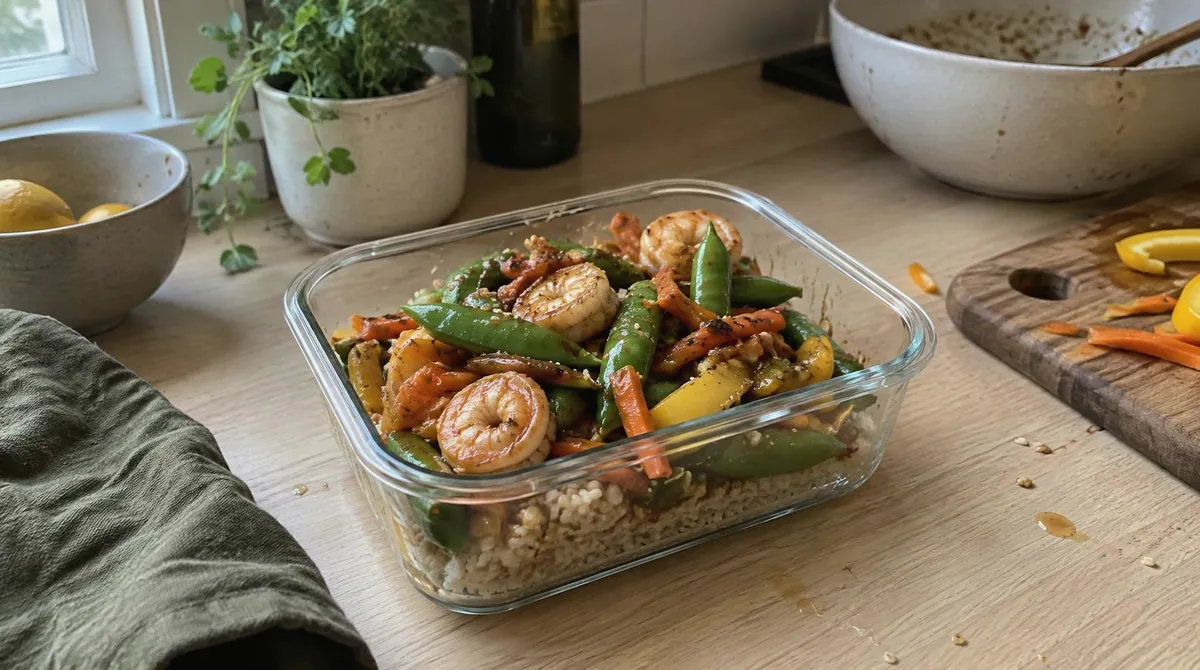
Stir-fry snap peas, sliced carrots and bell pepper in a hot pan for a few minutes, then add shrimp and cook just until pink and opaque, around 145°F. Overcooked shrimp turns rubbery when reheated.
Make a quick sauce of low-sodium soy sauce, garlic, ginger and a little honey, and pour it over at the end. Serve over brown rice. Like salmon, this box is best in the first half of the week.
7. Lentil and sweet potato stew
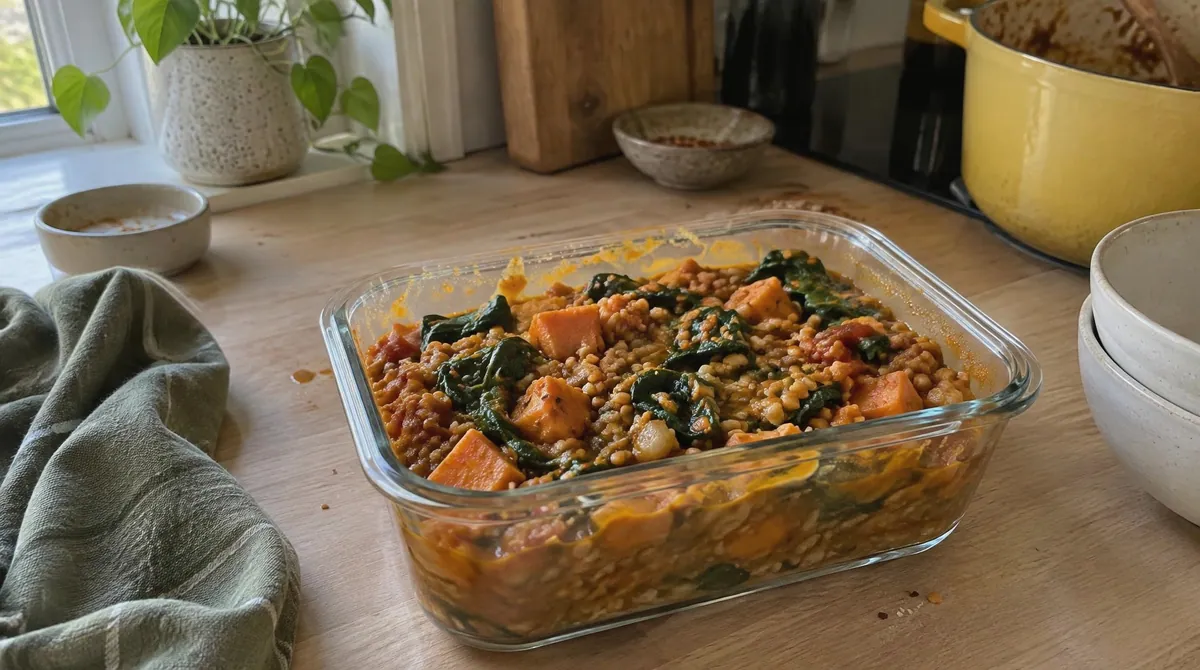
Soften onion and garlic in a pot, add diced sweet potato, a cup of red lentils, a can of tomatoes, cumin, smoked paprika and about four cups of broth. Simmer 20 to 25 minutes until the lentils break down. Stir in spinach at the end.
This is the box that improves in the fridge, and it freezes for up to three months. Make a double batch and freeze half in single portions.
8. How to roast everything on two pans
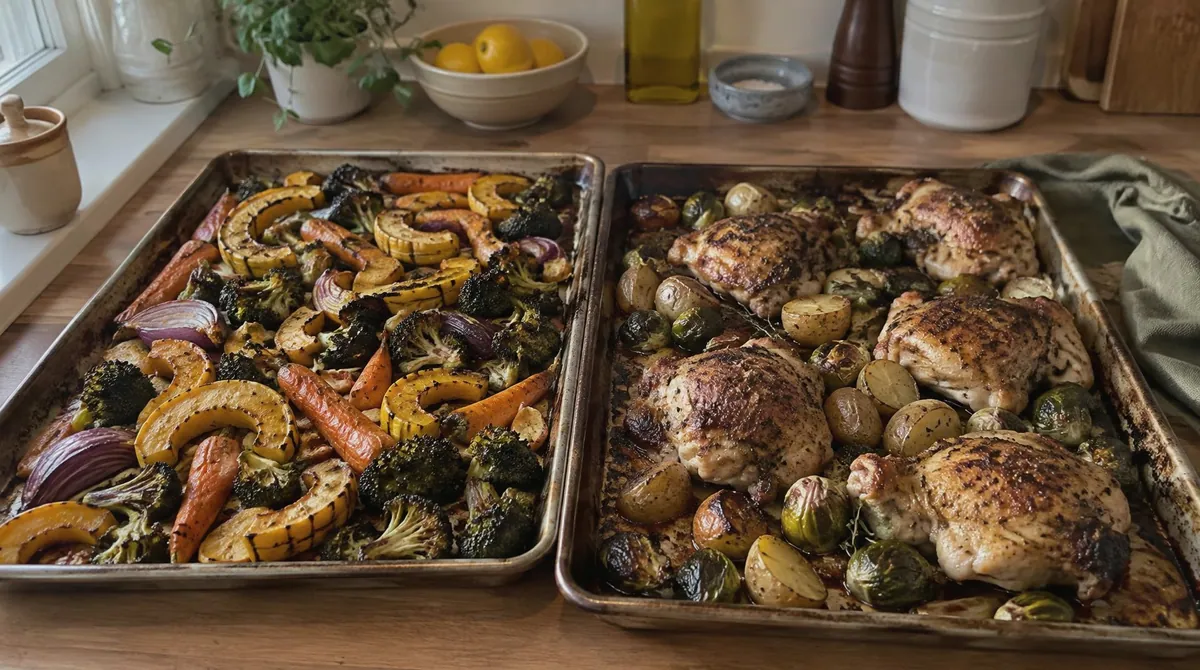
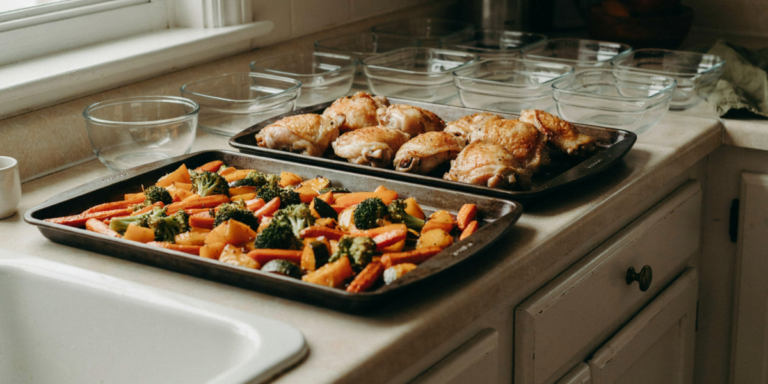
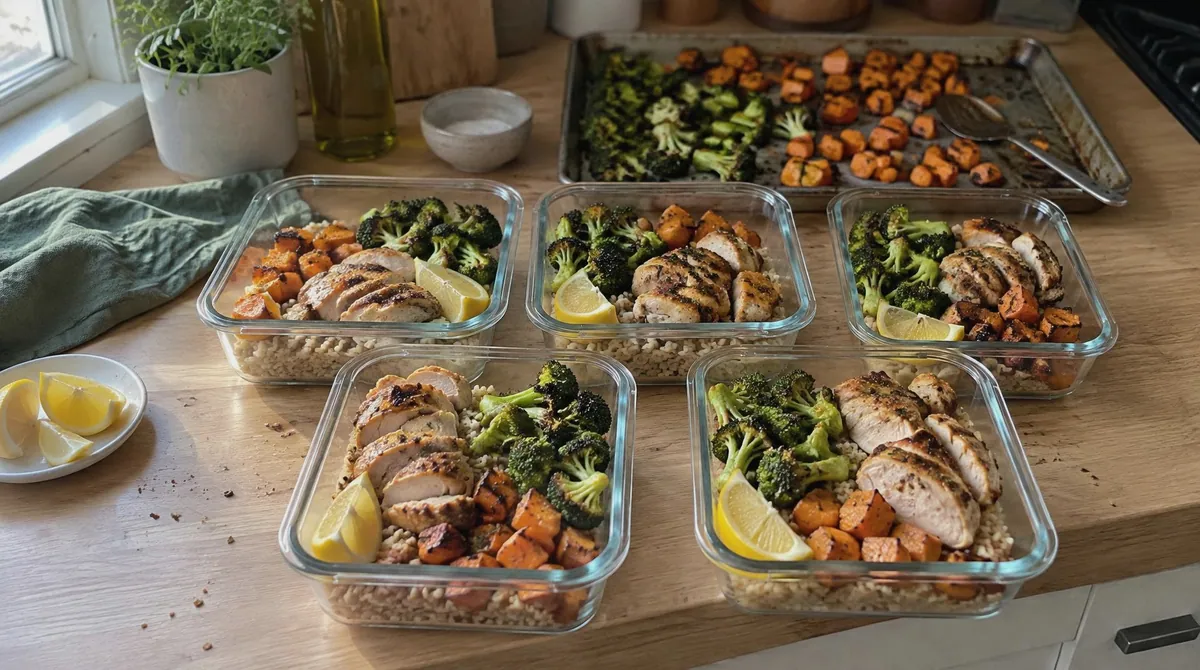
The fastest way to prep a healthy week is to let the oven do most of it. Heat it to 425°F and use two large sheet pans:
- Pan 1: chicken thighs or breasts on one half, chickpeas on the other.
- Pan 2: cubed sweet potato and broccoli on one half, zucchini, peppers and onion on the other.
Cut everything to similar sizes so it finishes together, and leave space between pieces; crowded vegetables steam instead of roast. Swap the pans between racks halfway. While they roast, the grain and the stew cook on the stove. Everything is done in about 40 minutes.
A Week of Healthy Meal Prep, Mixed
You don’t need seven different boxes every week. A realistic plan uses three or four:
| Day | Lunch | Dinner |
|---|---|---|
| Monday | Salmon, quinoa and green beans | Chicken, brown rice and broccoli |
| Tuesday | Shrimp stir-fry | Lentil and sweet potato stew |
| Wednesday | Chicken, brown rice and broccoli | Turkey taco bowl |
| Thursday | Chickpea bowl | Lentil and sweet potato stew |
| Friday | Turkey taco bowl | Something not from a box |
Breakfast is the egg box all week. Fish goes early, stew and chickpeas later, and Friday dinner is off the plan on purpose.
What We Would Skip
Prepping seven full days at once. Day six and seven food rarely tastes good, and it’s past the safe window for most cooked meals. Prep for four days, then do a smaller top-up midweek.
Plain steamed everything. Salt, acid and one spice make healthy food worth eating; leaving them out is how meal prep gets abandoned.
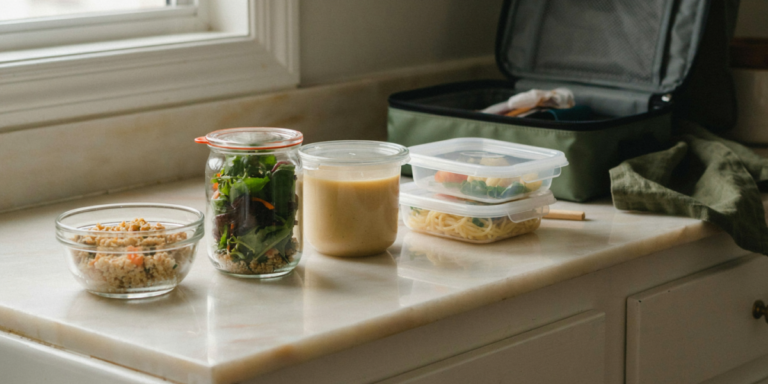
Dressing salads ahead. Keep dressings and sauces in small separate containers.
Where We Would Start
Two boxes: chicken with brown rice and broccoli, and the lentil stew. One uses the oven, the other a single pot, and between them they cover a work week of lunches.
Once that’s routine, our meal prep for the week plan shows how to build a full Sunday session, and the high protein meal prep boxes are the next step if protein is your focus. Good containers matter too; we went through what to look for in meal prep containers.
Questions We Get Asked
How long does healthy meal prep last in the fridge?
Most cooked boxes keep 3 to 4 days in the fridge at 40°F or below. Fish and shrimp taste best in the first two or three days. Freeze anything you won’t eat in time.
What are the healthiest foods to meal prep?
Lean proteins like chicken, turkey, fish, eggs, beans and lentils, whole grains like brown rice and quinoa, and vegetables that hold up well, such as broccoli, peppers, carrots, green beans and sweet potatoes.
Can I freeze healthy meal prep boxes?
Stews, chili, cooked grains and cooked chicken freeze well for up to three months. Raw vegetables, salads, eggs and dishes with crisp textures don’t freeze well.
How do I keep meal prep from getting boring?
Change one part of the formula each week: a different protein, a different grain or a different sauce. A new sauce alone makes the same box taste like a different meal.
Is meal prep healthy if you eat the same thing every day?
It can be, as long as the box includes protein, whole grains and vegetables. Rotating two or three different boxes over the week adds variety without much extra work.
How do I reheat meal prep without drying it out?
Add a splash of water or broth before microwaving, cover the container loosely and heat in short bursts, stirring in between. Reheat until steaming hot throughout.